Isoclima
04/08/2022
Share this post
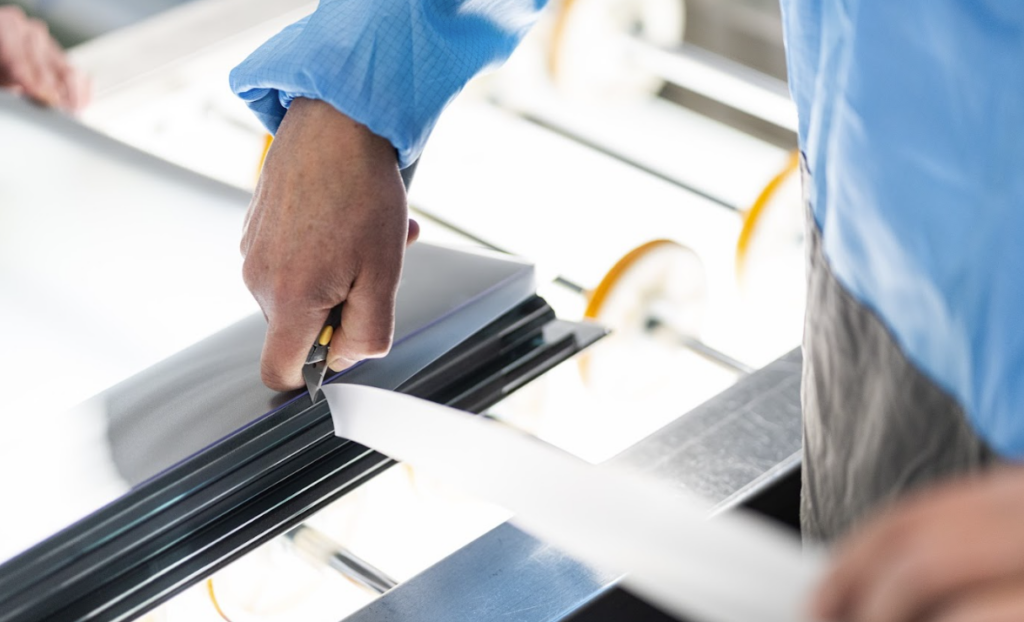
If we were to rank materials based on their exceptional characteristics, polycarbonate would undoubtedly be near the top.
It’s a thermoplastic polymer with high transparency, superior ductility, impact resistance, and lightness. It might sound contradictory, but it’s true: this transparent material is incredibly tough, which is why polycarbonate is the primary choice for aerospace windshields.
It’s used in contexts where resistance that other transparent materials can’t offer is required, such as when impact with birds—”bird-strikes”—occurs, making it a key component in helicopters and fighter jets.
Technical Characteristics of Polycarbonate
We can’t discuss the use of polycarbonate for aerospace applications without highlighting its technical characteristics. After all, such a high-performance material possesses properties that are interesting to explore.
Let’s start with its resistance: in this field, polycarbonate is unrivaled. Its impact resistance is 40 times greater than acrylic and 10 times greater than PETG and other transparent thermoplastic polymers.
It is also a flexible material, with a high elongation at break, from 80% to 160%, and a density that is half of glass (1200 kg/m³ compared to 2500 kg/m³). Chosen for its transparency, polycarbonate has high light transmission, even exceeding 90%, low water and humidity absorption, and good heat resistance, with a glass transition temperature of around 145°C, which is rarely found in other transparent thermoplastics.
Supporting Speed Without Danger
As evidenced by the characteristics listed above, polycarbonate is the material of choice for the aerospace sector. This is because it’s inevitable that dangerous incidents, like bird-strikes, occur during flight, and these are currently the primary threat to the aerospace industry. When analyzing different parts of an aircraft, the windshield and canopy are the areas most impacted by bird strikes.
Have you ever wondered what the impact speed of a bird can be? It can reach speeds of 250-350 km/h, depending on take-off and landing speed. Most bird-strike incidents occur during these two phases, causing surface cracks or punctures to the windshields and canopies, posing significant risks to the pilot and passengers.
Polycarbonate, processed with innovative methods, allows us to anticipate these dangers, providing high-performance surfaces in terms of both resistance and visibility.