Innovation & Tech
2 min read

Isoclima
09/03/2026
Share this post
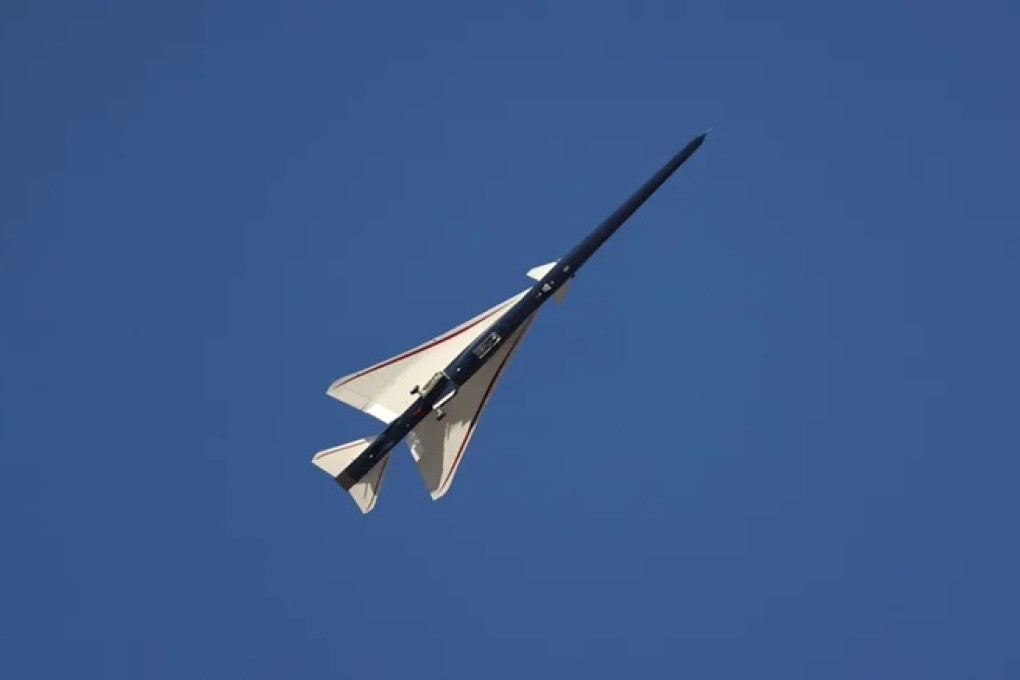
The future of supersonic aviation is taking shape with the development of the X-59 experimental aircraft, a breakthrough program led by NASA in collaboration with Lockheed Martin. Designed to demonstrate quiet supersonic technology, the aircraft aims to overcome one of the biggest barriers in high-speed aviation: the disruptive sonic boom traditionally associated with breaking the sound barrier.
The X-59 is part of NASA’s Quesst mission, an initiative focused on developing aircraft capable of flying faster than sound while reducing the boom to a softer “sonic thump.” The program’s goal is to gather flight data and help regulators define new standards that could eventually enable commercial supersonic travel over land, something currently restricted in many countries due to noise concerns.
Following its first flight tests, the X-59 will now enter a new phase of aerospace research and flight validation, during which engineers will gradually increase altitude and speed while analyzing aircraft performance and acoustic impact. These test campaigns will play a crucial role in validating the aircraft’s design and its ability to achieve Mach-speed travel with reduced environmental and acoustic impact.
Beyond its immediate technological objectives, the program represents a broader step toward the next generation of advanced aerospace engineering and sustainable high-speed mobility. Quiet supersonic aircraft could dramatically reduce intercontinental travel times and open new opportunities for innovation across aviation, advanced materials, aerodynamics and next-generation aircraft design.
Projects like the X-59 illustrate how aerospace innovation continues to push the boundaries of performance, efficiency and environmental compatibility. As the aviation sector explores new technologies and advanced engineering solutions, the integration of high-performance materials, aerodynamic optimization and digital design tools will be key to shaping the future of high-speed transportation.