Innovation & Tech
9 min read

Isoclima Group
02/09/2026
Share this post
Glazing for supercars: technical characteristics, materials and innovations
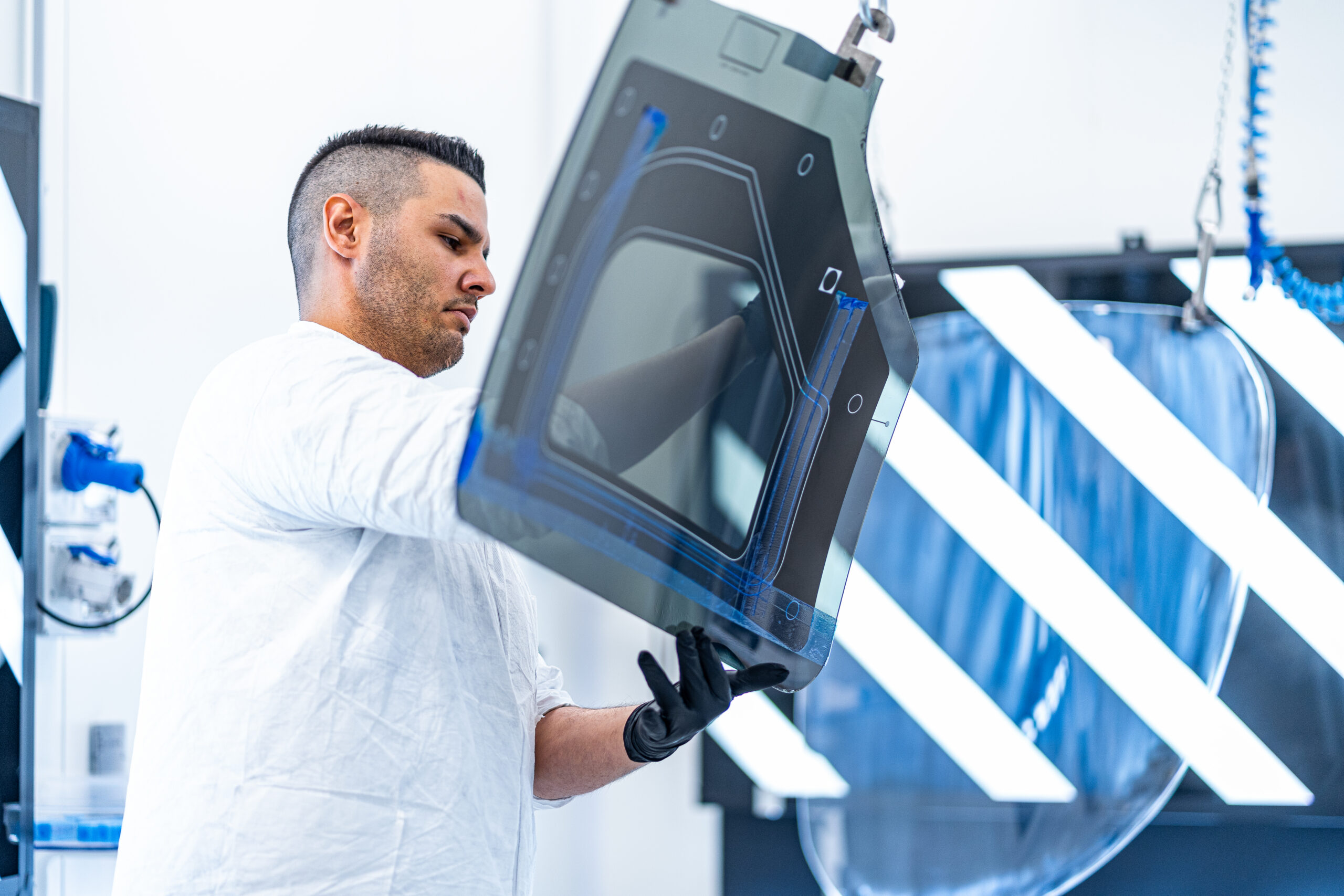
Supercars combine extreme performance, safety and design. In this context, glass is not a simple accessory component. It is a structural element.
Glass contributes directly to vehicle dynamics. It affects occupant safety. And it shapes the overall driving experience.
Designing glazing for supercars means reconciling different requirements. It needs to be light, strong, optically precise. And it must comply with international regulations.
Why supercar glazing is different
Supercar glazing differs significantly from that used on production vehicles. High speeds call for tailor-made solutions. So do aerodynamic loads and thermal stresses.
These solutions are often developed in direct collaboration with manufacturers.
Standard glass is not enough. It cannot match the same structural rigidity. And it cannot deliver the same behaviour in high-speed impacts.
For this reason, supercar manufacturers rely on specialised partners. These partners develop components that meet demanding technical specifications. At the same time, they keep weight low and optical quality high. Optical quality is essential: the driver needs full visibility, even in extreme driving conditions.
Materials used
Supercar glazing combines several materials. The mix is chosen to optimise the strength-to-weight ratio.
The most widely used solutions include:
- Tempered glass. A heat treatment increases its mechanical strength. It also changes how the glass breaks, reducing the risk of sharp fragments.
- Laminated glass. Multiple layers of glass are bonded with a polymer interlayer, typically PVB. This ensures greater safety in the event of impact and improves acoustic performance.
- Polycarbonate and hybrid glass-polycarbonate materials. These further reduce overall weight. They are especially useful where every gram affects the vehicle’s dynamic performance.
The choice between these solutions depends on several factors. These include the specific requirements of the project, the component’s position on the vehicle, and the performance targets set by the manufacturer.
Weight and strength requirements
In the supercar sector, weight is a critical parameter. Every component is evaluated for its function. But its contribution to overall vehicle weight matters just as much.
This weight has a direct effect on three key areas: acceleration, road holding and fuel consumption.
Glazing must therefore deliver the highest level of structural strength. And it must do so with the minimum possible thickness and weight.
How is this achieved? Through a combination of factors: material selection, thickness optimisation and advanced manufacturing processes. Together, these ensure consistent performance even under high mechanical and thermal stress.
Strength is not just about impact resistance. It also covers dimensional and optical stability over time. This is essential for components exposed to continuous vibration, thermal changes and aerodynamic stress.
Application examples
Technical glazing is used in several ways across the supercar segment:
- Windscreens. They guarantee maximum visibility and impact resistance, with minimal weight.
- Rear windows and side glazing. Often made with lightweight solutions. They help reduce overall weight without compromising safety.
- Glass roofs. Increasingly used for aesthetic and comfort reasons. They require particular attention to structural and thermal requirements.
- Transparent aerodynamic components. Some supercars integrate glazing into functional aerodynamic elements too. Here, dimensional precision is a determining factor.
Each application calls for a specific design approach. It always develops through close collaboration with manufacturers, to meet the technical and aesthetic requirements of each model.
Supercar glazing is therefore a highly specialised technical field. The ongoing pursuit of innovative solutions makes it possible to meet increasingly demanding requirements in terms of performance, safety and design.