Isoclima Group
18/06/2026
Share this post
Bulletproof glass is a high-performance material. It is designed to withstand bullets, explosive fragments and forced entry attempts.
Contrary to what the name suggests, it is not simply thick glass. Instead, it is a layered composite system. It combines different materials to guarantee protection, transparency and structural integrity.
Bulletproof glass is used in the military, banking, automotive and architectural sectors. Today, it is a mature technical solution. It is also regulated at European level.
Composition and Materials
Bulletproof glass comes from joining multiple layers of transparent materials. Adhesion promoters bond these layers together. The typical structure includes:
- Layers of float or tempered glass. These provide rigidity and resistance to the initial impact.
- Layers of polycarbonate (PC). This is a thermoplastic polymer with high impact resistance. It absorbs the bullet’s residual energy.
- Interlayers. These hold fragments together if the glass breaks. They also increase energy absorption.
The total thickness of a bulletproof panel usually ranges from 20 mm to over 70 mm. This depends on the level of protection required.
Some advanced systems also add layers of chemically tempered glass or composite materials. Military applications use these especially often. Here, the goal is to reduce weight without lowering ballistic performance.
How It Resists Bullets
The idea behind bulletproof glass is simple: it dissipates the bullet’s kinetic energy gradually. This happens through the different layers of the composite. On impact, three mechanisms activate in sequence.
- First, the outer glass layer deforms and cracks. This layer absorbs the hit. It cracks and starts absorbing energy. As a result, it slows the bullet down and deforms its tip.
- Next, the interlayers absorb energy. The polymer films between the layers stretch elastically. This spreads the energy over a wider surface. It also stops fractures from spreading out of control.
- Finally, the polycarbonate layer stops the bullet. Thanks to its high toughness, this inner layer holds the fragments together. It stops the bullet before it can pass through the panel completely.
So, the system does not “block” the bullet like a wall. Instead, it slows the bullet down step by step until it stops. At the same time, it keeps fragments from flying toward the interior.
EN 1063 Resistance Classes
In Europe, the EN 1063 standard regulates the classification of bulletproof glass. This standard defines seven ballistic resistance classes, from BR1 to BR7. It also adds two classes for resistance to bursts of fire: SG1 and SG2.
Each class depends on three factors: the ammunition used, the bullet’s velocity, and the firing distance.
| Class | Test weapon | Caliber |
|---|---|---|
| BR1 | Rifle | .22 LR |
| BR2 | Handgun | 9 mm Parabellum |
| BR3 | Handgun | .357 Magnum |
| BR4 | Handgun | .44 Magnum |
| BR5 | Rifle | 5.56 × 45 mm |
| BR6 | Rifle | 7.62 × 51 mm |
| BR7 | Rifle | 7.62 × 51 mm |
During testing, each sample takes three shots in sequence. It only passes if none of the shots fully penetrate the panel. Because of this, the standard is the mandatory reference for professional, institutional and governmental supplies.
Main Applications
Automotive
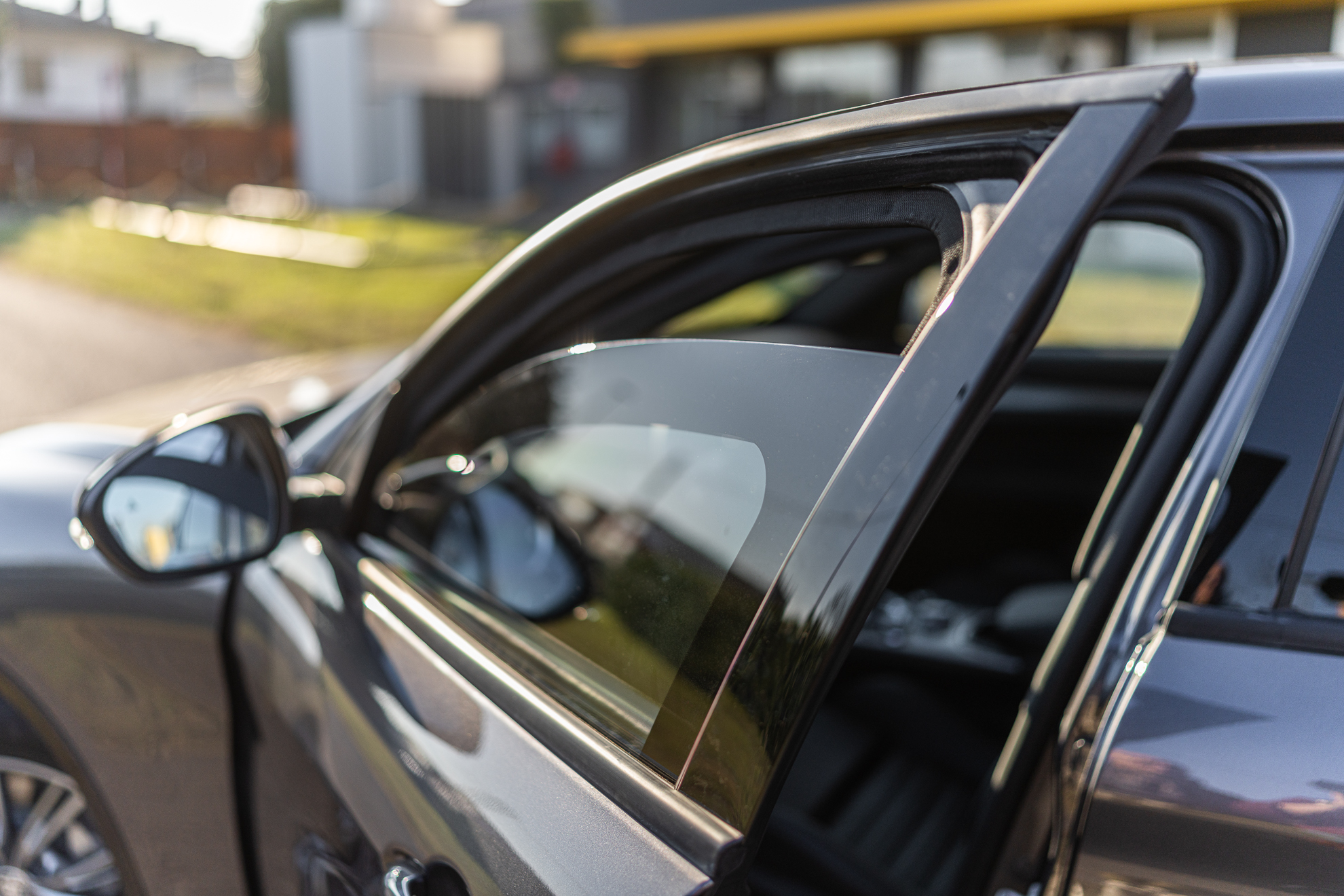
In the automotive sector, armoured vehicles use bulletproof glass. These vehicles often transport institutional figures, diplomats, security personnel and valuables.
The panels must meet strict requirements. These cover curvature, weight and integration with armoured doors. Government vehicles generally need at least class BR6. Civilian VIP applications, on the other hand, often use BR4 or BR5.
Defence
In the military and government sphere, bulletproof glass appears in tactical vehicles, fixed positions, turrets and advanced command structures. Here, multilayer composites combine glass, polycarbonate and ballistic ceramics. The goal is clear: keep the overall weight down while still protecting against armour-piercing ammunition and blast fragments.
Buildings
Architects also use bulletproof glass in banks, embassies, courts, control centres and other high-risk facilities. In these cases, the panels need more than ballistic resistance. They must also meet the aesthetic and thermal requirements of modern buildings.
The EN 1063 standard applies here too. Often, it works alongside EN 356, which covers resistance to manual break-in.