Glazing for supercars: technical characteristics, materials and innovations
Supercars combine extreme performance, safety and design. In this context, glass is not a simple accessory component. It is a structural element.
Glass contributes directly to vehicle dynamics. It affects occupant safety. And it shapes the overall driving experience.
Designing glazing for supercars means reconciling different requirements. It needs to be light, strong, optically precise. And it must comply with international regulations.
Why supercar glazing is different
Supercar glazing differs significantly from that used on production vehicles. High speeds call for tailor-made solutions. So do aerodynamic loads and thermal stresses.
These solutions are often developed in direct collaboration with manufacturers.
Standard glass is not enough. It cannot match the same structural rigidity. And it cannot deliver the same behaviour in high-speed impacts.
For this reason, supercar manufacturers rely on specialised partners. These partners develop components that meet demanding technical specifications. At the same time, they keep weight low and optical quality high. Optical quality is essential: the driver needs full visibility, even in extreme driving conditions.
Materials used
Supercar glazing combines several materials. The mix is chosen to optimise the strength-to-weight ratio.
The most widely used solutions include:
- Tempered glass. A heat treatment increases its mechanical strength. It also changes how the glass breaks, reducing the risk of sharp fragments.
- Laminated glass. Multiple layers of glass are bonded with a polymer interlayer, typically PVB. This ensures greater safety in the event of impact and improves acoustic performance.
- Polycarbonate and hybrid glass-polycarbonate materials. These further reduce overall weight. They are especially useful where every gram affects the vehicle’s dynamic performance.
The choice between these solutions depends on several factors. These include the specific requirements of the project, the component’s position on the vehicle, and the performance targets set by the manufacturer.
Weight and strength requirements
In the supercar sector, weight is a critical parameter. Every component is evaluated for its function. But its contribution to overall vehicle weight matters just as much.
This weight has a direct effect on three key areas: acceleration, road holding and fuel consumption.
Glazing must therefore deliver the highest level of structural strength. And it must do so with the minimum possible thickness and weight.
How is this achieved? Through a combination of factors: material selection, thickness optimisation and advanced manufacturing processes. Together, these ensure consistent performance even under high mechanical and thermal stress.
Strength is not just about impact resistance. It also covers dimensional and optical stability over time. This is essential for components exposed to continuous vibration, thermal changes and aerodynamic stress.
Application examples
Technical glazing is used in several ways across the supercar segment:
- Windscreens. They guarantee maximum visibility and impact resistance, with minimal weight.
- Rear windows and side glazing. Often made with lightweight solutions. They help reduce overall weight without compromising safety.
- Glass roofs. Increasingly used for aesthetic and comfort reasons. They require particular attention to structural and thermal requirements.
- Transparent aerodynamic components. Some supercars integrate glazing into functional aerodynamic elements too. Here, dimensional precision is a determining factor.
Each application calls for a specific design approach. It always develops through close collaboration with manufacturers, to meet the technical and aesthetic requirements of each model.
Supercar glazing is therefore a highly specialised technical field. The ongoing pursuit of innovative solutions makes it possible to meet increasingly demanding requirements in terms of performance, safety and design.
Este, August 28, 2026 – Isoclima, global leader in the design and manufacturing of high-performance transparent solutions, announces the completion of the transaction through which Fondo Italiano d’Investimento and The Equity Club become the new shareholders of the Group.
The transaction marks the beginning of a new phase in Isoclima’s development, driven by a shared long-term vision focused on growth, technological innovation and the continued strengthening of the Group’s international presence.
With operations across Europe and North America and a strong position in highly specialized applications, Isoclima will continue to build on its distinctive technological know-how and capabilities, strengthening its global presence and pursuing new opportunities across the industries it serves.
“This is an important milestone for Isoclima and the beginning of a new phase for our Group,” said Liviana Forza, CEO of Isoclima. “With our new shareholders, we share a long-term vision and the ambition to build on the strengths that have established Isoclima as a global benchmark for excellence in the sectors we serve. We are proud of what our global team has achieved, and we will continue to invest in our people, innovation and international growth as we take Isoclima forward.”
About Isoclima Group
Isoclima Group is global leader in the design and manufacturing of high-performance transparent solutions for applications across sectors such as Civilian Armored and Defense Vehicles, Helicopters and Aerospace, Yachting, High Performance Cars, Rail, and Security and Specialized Architecture.
Renowned for its ongoing commitment to innovation and quality, Isoclima develops customized solutions that combine the highest standards of safety, design, and reliability, meeting the needs of prestigious clients worldwide.
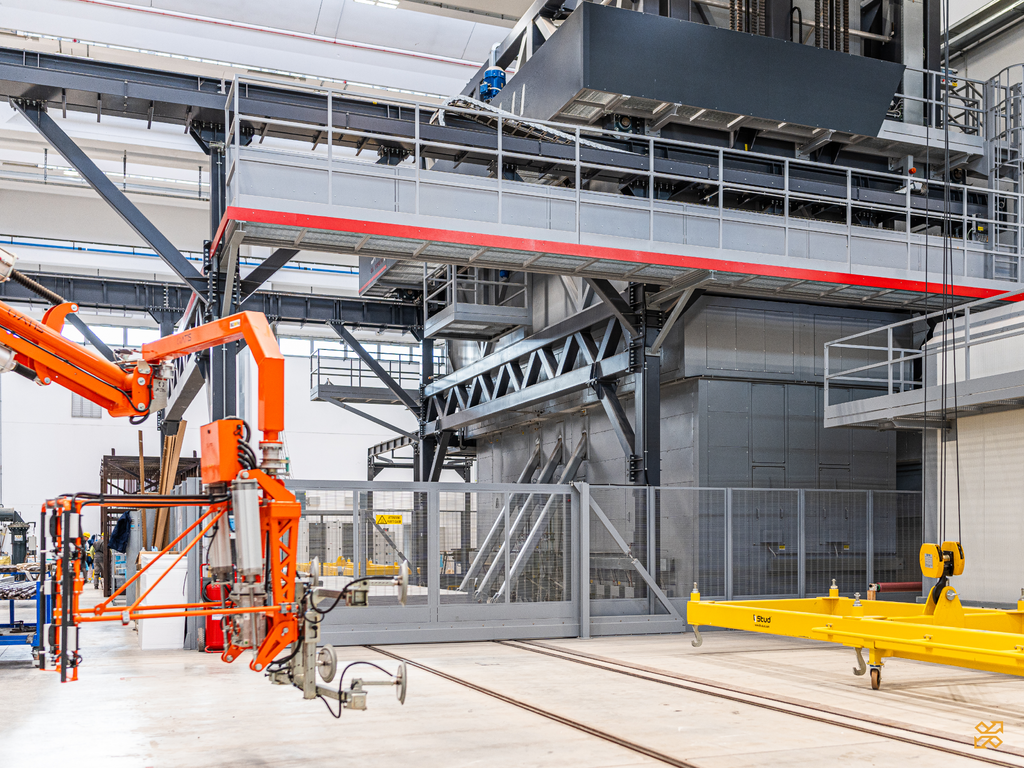
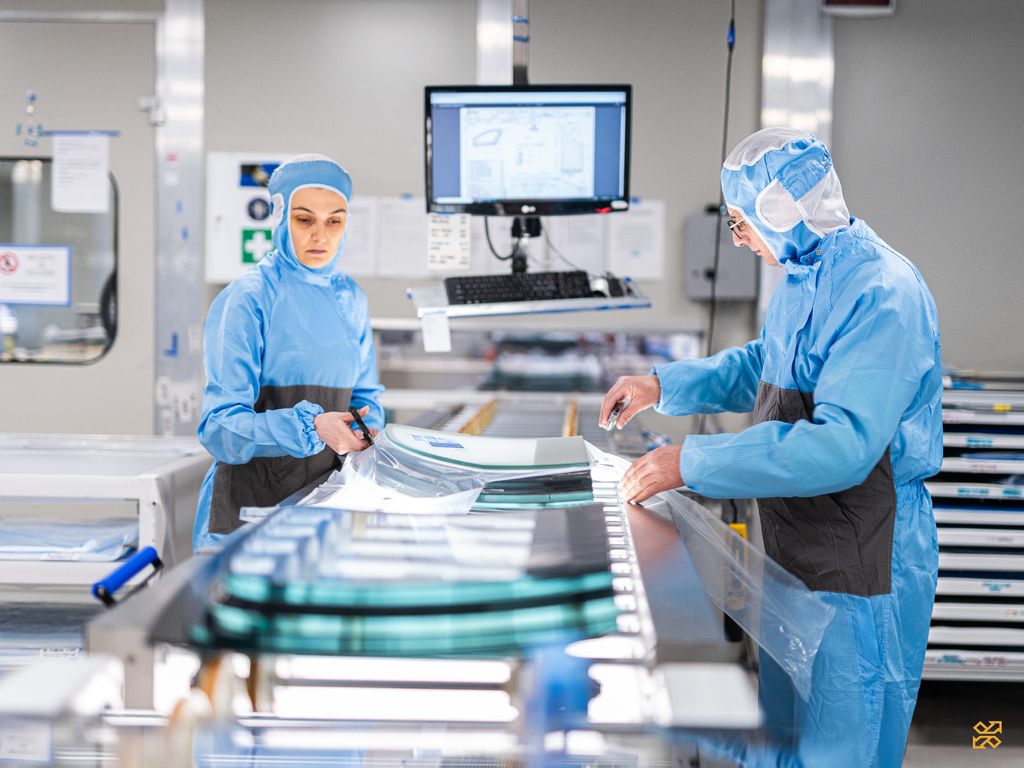
Producing curved glass requires specific technical expertise and rigorous control at every stage of the process. From automotive to aerospace applications, through to marine and architectural security sectors, glass bending meets increasingly complex design requirements, where geometric precision and mechanical strength must coexist without compromise.
In this article, we examine the main bending technologies, the applicable dimensional tolerances and the quality control criteria that ensure the finished product complies with the standards required by different industrial sectors.
Thermal Bending (Gravity Bending, Press Bending)
Thermal bending is the most widely used process for producing curved glass on a large scale. The underlying principle is simple: the glass is heated until it reaches its softening temperature, generally between 600°C and 650°C, and is then shaped according to the required geometry.
In gravity bending, the heated sheet is placed on a shaped mould and takes on the required form under its own weight, without the intervention of external compressive forces. This method is particularly suited to simple curvatures and large surfaces, where optical quality must remain high across the entire extension of the sheet.
Press bending, on the other hand, uses two complementary moulds that compress the heated glass, imprinting more complex geometries and tighter bending radii than gravity bending. This technique allows for greater dimensional repeatability and is suited to production with stringent geometric requirements, as in the case of components intended for regulated sectors.
Both processes are followed by a controlled cooling phase, which can be aimed at annealing or tempering, depending on the mechanical characteristics required for the final product.
Chemical Bending
Chemical bending is an alternative to thermal processing, used mainly when the required geometry or the characteristics of the glass are not compatible with high-temperature processes. This approach relies on the use of saline solutions which, through a controlled ion exchange, modify the surface properties of the glass, allowing gradual deformation without exposure to high temperatures.
The process is applied in contexts where it is necessary to preserve the material’s optical properties as much as possible, or to work on thicknesses and configurations that cannot be managed with traditional thermal methods. It is generally a slower process than thermal bending, but capable of offering a higher level of precision on complex geometries.
Geometric Tolerances
Defining geometric tolerances is a central element in the design of curved glass components, particularly for applications where the glass is integrated into structures and mechanical systems with stringent dimensional requirements.
Applicable tolerances vary depending on several factors: the bending process used, the thickness of the sheet, the required bending radius and the overall dimensions of the component. In general, press bending allows for tighter tolerances than gravity bending, thanks to the direct control exerted by the moulds during forming.
Parameters such as residual flatness, deviation from the theoretical profile and uniformity of the bending radius are defined during the design phase and verified using dedicated instrumentation, to ensure full compatibility of the component with the final assembly.
Quality Control
Quality control in curved glass production takes place throughout the entire production cycle, from raw material selection to verification of the finished product. Each sheet undergoes dimensional checks to confirm that the geometry obtained matches the design specifications, with particular attention to bending radius, flatness and optical distortion.
Optical quality is a determining parameter, especially for applications where visibility and the absence of distortion are essential functional requirements, such as cockpits or security glazing. Checks are carried out both in the production environment and through laboratory testing, in compliance with the technical standards applicable to the target sector.
The structural integrity of the glass is also verified, with checks aimed at identifying any residual stress or surface defects that could compromise its performance over time.
Bending Limits by Glass Type
Applicable bending limits largely depend on the type of glass used and its intrinsic characteristics. Standard float glass allows for relatively wide bending radii with traditional thermal processes, while tempered glass, due to the internal stresses generated by the treatment, has more stringent constraints on the geometry achievable after bending.
Laminated glass, made up of multiple layers bonded through polymeric interlayers, requires careful balancing between the curvatures of the individual layers, to avoid differential stresses that could compromise stability over time. In multilayer systems intended for high-performance applications, bending limits are also defined based on the overall thickness of the glass package, which directly affects the formability of the component.
The combination of bending technology, glass type and application requirements therefore defines the design space within which curved glass solutions can be developed to meet the needs of the most demanding sectors, from transportation to defence, through to architectural security applications.
Aircraft windows are not simple transparent components. They are structural elements. They must withstand extreme stresses and guarantee passenger safety throughout every phase of flight. For this reason, their production requires specific materials and rigorous engineering processes. In addition, every stage is subject to strict international regulations.
In this article, we look at the technical characteristics of aircraft windows. We explain which materials are used and which regulations govern the sector.
Why aircraft windows are special
Aircraft windows operate in conditions very different from glass used in construction or the automotive industry. During flight, an aircraft reaches cruising altitudes above 10,000 metres. At that altitude, the outside temperature drops to around -50°C. Atmospheric pressure, moreover, is much lower than the pressure inside the cabin.
This pressure difference creates a constant load on the window. The component must maintain its integrity for the entire duration of the flight. Vibrations, rapid temperature changes and, occasionally, impacts from debris or birds add to this load.
For these reasons, every aircraft window is a multi-layer system. Each layer has a specific function: structural strength, thermal insulation, UV protection and safety in the event of breakage.
Materials: laminated glass, acrylic, polycarbonate
The choice of materials for aircraft windows depends on the component’s position and the required performance. Here are the three main materials:
- Laminated glass. Manufacturers use it mainly for cockpit windshields. Here, mechanical strength and optical clarity are the priorities. Laminated glass consists of several layers alternated with polymer interlayers. These layers absorb energy on impact and hold the panel together even after partial breakage.
- Acrylic (PMMA). It is one of the most common materials for passenger windows. It offers a good balance of light weight, transparency and cost. Its optical properties are excellent, but it withstands impact less well than other polymers.
- Polycarbonate. Designers choose it when impact resistance is the priority. They use it, for example, for ballistic protection or high-energy impacts, such as in the defence sector. It offers greater mechanical strength but requires specific surface treatments against scratching.
In many applications, manufacturers combine these materials into layered structures. This way, they achieve the best balance of weight, strength, durability and optical quality.
Differential pressure and strength
Managing differential pressure is one of the most critical aspects of window design. This term refers to the difference between the pressure inside the cabin and the pressure outside at altitude. The load acts continuously throughout the flight. As a result, it must not compromise the structural integrity of the component.
For this reason, passenger windows generally have three panes:
- An outer structural pane.
- An inner safety pane, which acts as a backup if the outer pane fails.
- An inner trim pane, non-structural, with an aesthetic and protective function.
A small breather hole in the middle pane equalises the pressure between the two chambers. This also reduces condensation build-up.
Every component undergoes rigorous strength testing. Engineers simulate repeated pressurisation and depressurisation cycles. They also carry out impact tests and extreme-temperature resistance tests. Only in this way can they verify compliance with the safety margins required by the industry.
FAA/EASA regulations
Bodies such as the FAA (Federal Aviation Administration) in the United States and EASA (European Union Aviation Safety Agency) in Europe regulate the production and installation of aircraft windows. Both define detailed technical requirements. These requirements cover mechanical strength, failure behaviour, fire resistance and compatibility with other aircraft systems.
Federal Aviation Regulation Part 25, for example, applies to transport-category aircraft. This regulation sets the minimum criteria that windows must meet. These include load resistance, structural redundancy and post-failure behaviour. Compliance with these requirements is a prerequisite for obtaining airworthiness certification.
Certification process
The certification process for a transparent aviation component involves several stages.
First, designers define the requirements based on the applicable regulation and aircraft type. A laboratory testing phase follows, covering mechanical strength, impact resistance, extreme-temperature behaviour and ageing resistance.
After this phase, the relevant certifying body verifies the component’s compliance. It reviews the technical documentation and test results. Only at the end of this process does the body approve the component for installation on civil or military aircraft, in line with the aerospace industry’s international safety standards.
The luxury yachting sector places particular demands on glass. No other industry faces the same challenges to the same extent. On board a superyacht, glass is not simply an architectural element. It is an integral part of the structure. It contributes to the safety of the vessel. And it defines the onboard experience.
Designing yacht glass therefore means reconciling three needs: aesthetics, technical performance and regulatory compliance. Every component must withstand extreme operating conditions, typical of the marine environment.
Why a superyacht requires special solutions
On board a yacht, glass is subjected to stresses that a building never encounters. Waves, structural vibrations, thermal cycling, salt exposure and continuous UV radiation put every material to the test.
Added to these stresses are the constraints typical of naval construction. Dimensions and weight, in particular, directly affect the vessel’s performance: every kilogram counts.
Yacht glass must also comply with the standards set by naval classification societies. These regulations govern mechanical strength, fire behaviour and watertightness. For this reason, design requires a dedicated engineering approach. Materials, laminations and treatments are selected according to the specific application: windscreens, side windows, portholes, sunroofs or glazed walls in common areas.
Large-size glass and complex shapes
Contemporary superyacht design favours wide, continuous glazed surfaces. Often curved, these surfaces maximise natural light. They also increase the sense of openness to the sea.
Producing large panels with complex geometries brings significant technical challenges, though. Glass curving must be controlled with precision. Dimensional tolerances require careful management. And integration with the hull structure adds a further layer of complexity.
Processing involves tempering and lamination calibrated with care. This ensures optical uniformity even over large surfaces, avoiding visual distortion that would compromise the onboard experience. Design also accounts for the vessel’s dynamic behaviour: the glass must absorb flexing and vibration without generating localised stresses that would reduce its durability over time.
Smart glass and privacy on superyachts
Adjustable privacy is a central theme in superyacht interiors. Owner’s cabins, lounges and spa areas call for flexible solutions. Smart glass technologies respond well to this need.
Electrochromic and liquid crystal glass allow the opacity of the surface to be varied electrically. This removes the need for curtains or mechanical shading.
This solution offers two main benefits. On one hand, it maintains visual continuity with the surroundings even when opaque. On the other, it reduces the footprint of shading elements and simplifies maintenance. Integrating smart glass systems, however, requires careful evaluation: energy consumption, resistance to the marine environment and compatibility with the other onboard electrical systems.
The custom design process
Every yacht glazing project starts as shared work. Shipyard, design studio and glass manufacturer collaborate from the early stages.
The process begins with an analysis of the vessel’s requirements. This analysis covers expected structural loads, applicable classification regulations and the aesthetic specifications set by the interior and exterior design project.
Based on this data, technical drawings and prototypes are developed. These then undergo mechanical, thermal and, where required, ballistic testing. Only once validation is complete does production of the final components begin, calibrated to the vessel’s specific dimensions and curvatures.
This approach integrates naval engineering expertise with technical glass manufacturing. The result is bespoke solutions, able to meet the criteria of safety, performance and design: essential elements for the luxury superyacht segment.
What is smart glass
Smart glass, or intelligent glazing, is a glazing solution that can change its own optical properties. It can adjust transparency, opacity and its ability to filter light and heat. This happens in response to an external stimulus: electrical, thermal or light-based.
Traditional glass keeps fixed characteristics over time. Smart glass works differently. It allows dynamic control over natural light and thermal gain inside a building. As a result, it offers active management of environmental comfort.
In construction, smart glass is one of the most concrete answers to a growing demand. Building owners want higher energy efficiency. They also want better comfort for occupants. Adoption is steadily increasing across residential, commercial and infrastructure projects. Regulations are also playing a role, as they increasingly push toward lower building energy consumption.
How it works (physical principle)
Smart glass relies on one of four main technologies: electrochromic, thermochromic, photochromic or liquid-crystal. Each follows a different physical principle.
In electrochromic systems, an applied voltage triggers a chemical reaction. This happens within a thin layer of active material, typically tungsten oxide. The reaction changes the material’s molecular structure. In turn, this changes how much light passes through the glass. The process is fully reversible. It allows gradual tint adjustment, from clear to fully darkened.
Thermochromic systems work differently. They respond to temperature rather than voltage. Once a critical threshold is exceeded, the active material changes its crystalline structure. It then automatically reduces transmission of infrared radiation. No electrical power is needed.
Photochromic glass responds to light intensity. It darkens under strong sunlight, similar to photochromic eyewear. Liquid-crystal systems (PDLC) work differently again. They use an electrical field to align molecules dispersed in a polymer layer. The glass switches from opaque and diffusive to transparent within moments.
Types of smart glass
Several types of smart glass are available today. Each differs in technology, response time and typical use.
- Electrochromic glass: offers precise, gradual control over tinting. Transition times range from a few minutes, depending on the surface size. It is the most common choice in high-end architectural projects.
- Thermochromic glass: needs no electrical power or control systems. It suits projects that prioritize simple installation and low maintenance.
- Photochromic glass: responds automatically to ambient light. It is more established in automotive and eyewear applications than in construction.
- Liquid-crystal glass (PDLC): switches instantly between transparent and opaque states. It works best for dynamic privacy needs rather than thermal control.
- SPD glass (Suspended Particle Device): allows fine, continuous tint adjustment through voltage changes. Response times are very fast.
Each technology has its own energy performance and integration requirements. The right choice depends on the specific goals of the project.
Applications: facades, roofing, partitions
Smart glass is used across several parts of a building. This includes both the exterior envelope and interior spaces.
In curtain wall facades, smart glass manages solar gain dynamically. This reduces glare. It also helps limit thermal load on the HVAC system. At the same time, interiors keep their transparency and natural brightness.
In glazed roofing, such as skylights and sawtooth roof systems, the technology modulates direct sunlight entering the spaces below. This improves visual comfort. It also reduces the risk of overheating during peak daylight hours.
In interior partitions, smart glass serves offices, meeting rooms and healthcare facilities. The PDLC variant is especially common here. It provides privacy on demand, replacing curtains and blinds. The result is a cleaner look and easier maintenance, since privacy control is built directly into the glass.
Energy and comfort benefits
Smart glass delivers measurable benefits on two fronts: energy performance and occupant comfort.
On the energy side, dynamic solar gain control reduces summer cooling demand. It also limits heat loss in winter. Over time, this can improve a building’s energy rating and lower operating costs.
On the comfort side, better glare control and more stable indoor temperatures improve daily experience for occupants. Buildings need fewer additional shading solutions, such as curtains or blinds. Architects also gain new design freedom. They can integrate the technology into flexible, aesthetic solutions tailored to each building’s needs.
Finally, smart glass can connect to building automation systems. This allows tinting to adjust automatically based on solar irradiation, outdoor temperature and space occupancy. The result is better overall building performance, with less manual intervention required.
Glazed surfaces are a key technical and aesthetic element in yacht design. On board a yacht, glass does more than close off and protect spaces from the elements. It also shapes the comfort of interiors, the brightness of living spaces and the overall style of the vessel.
So, choosing the right materials and processes matters a lot. It means meeting strict requirements for safety, durability and regulatory compliance. And it means doing so while keeping a high aesthetic standard.
The different areas that need glass for yachts
Every yacht includes several types of glazed surfaces. Each one has its own function and its own design constraints.
Take the windshield on the bridge, for example. It needs particularly high optical and structural performance. Why? Because it must guarantee visibility in any weather and sea condition, and withstand constant dynamic stress.
Cabin windows and portholes sit along the hull. They must ensure watertightness and resist water pressure. On top of that, they need to provide proper thermal and acoustic insulation, so interior spaces stay comfortable.
Then there is panoramic glazing in saloons and lounge areas. This mainly serves brightness and visual continuity with the outside, two things that matter more and more in modern yacht design.
Finally, other glazed elements include:
- Glass railings and balustrades, structural components that must ensure safety even in strong winds and rough seas
- Sliding roof glazing, exposed to continuous opening and closing cycles as well as prolonged direct exposure to the elements
Materials for the marine environment
The marine environment is demanding. So glass materials need to be up to the task.
Tempered glass is a common choice. Why? It offers strong mechanical resistance, and when it breaks, it shatters into small, low-risk fragments.
Laminated glass goes a step further. It is made by bonding multiple glass layers with polymer interlayers. As a result, it offers an even higher level of safety: it keeps the surface intact after impact and reduces the risk of water or debris getting through.
Weight matters too, especially in aerospace and in some high-performance yacht configurations. That is where hybrid solutions come in, combining glass with transparent polymers. These can significantly cut the overall weight of the structure, without compromising strength.
So, which material is right? It depends on where the glass will be installed, how the yacht is used, and the performance requirements set during the design phase.
Resistance to salt and UV exposure
Salt, humidity and UV radiation. Together, they are one of the main causes of degradation for glazed surfaces in a marine environment.
That is why surface treatments and coatings matter so much. Applied to the glass panels, they help preserve both the optical and structural properties of the glass over time. In practice, this means less clouding, less yellowing and less loss of clarity.
Anti-reflective and anti-UV coatings keep the visual performance of the glazing consistent over the years. Water-repellent treatments, meanwhile, make routine maintenance easier by cutting down salt buildup on the surface.
Put well-selected base materials together with the right treatments, and you get glass components that keep performing well, even after years of navigation in harsh conditions.
Marine regulations
The production of glass for marine use does not happen in a vacuum. It is governed by a detailed regulatory framework, made up of international standards and specific requirements set by classification bodies. Together, these define the minimum requirements for mechanical strength, tightness and safety for glazed components installed on board.
Why does this matter so much? Because regulatory compliance is essential for a vessel’s approval and registration. It requires a certification process that includes laboratory testing, structural checks and detailed technical documentation.
That is why working with shipyards from the earliest design stages pays off. It helps align glazing solutions with applicable regulations, shortens validation times and ensures full traceability of components.
Custom vs. series production
Luxury and custom-build yachts often need glazing solutions developed specifically for the project. Think curved geometries, non-standard dimensions and technical specifications tailored to each individual build. Custom production makes it possible to meet these requirements precisely. It integrates structural and design constraints from the shipyard and design team right from the engineering stage.
Series production works differently. It remains the most efficient option for standardised components used on vessels built in larger volumes. Here, economies of scale help keep costs down, without giving up on quality.
So why does it help to manage both approaches under one roof? Because industrial partners in the marine sector can then rely on a single partner for the entire project lifecycle, from design through to final delivery.
Isoclima concludes a successful participation at Farnborough International Airshow 2026, reinforcing its position in the global aerospace industry
Farnborough (UK), 24 July 2026 – Isoclima Group has successfully concluded its participation in the Farnborough International Airshow 2026, one of the world’s leading events for the aerospace industry, where the company met with customers, aircraft manufacturers, technology partners and institutional representatives from across the global aerospace ecosystem.
Hosted within the Italian Pavilion organised by the Italian Trade Agency (ITA), Isoclima used the event to strengthen existing relationships, establish new contacts and discuss the technological trends that are shaping the future of civil aviation, defence and advanced air mobility.
Throughout the exhibition, discussions consistently highlighted the growing importance of advanced transparent technologies in enabling safer, lighter and increasingly integrated aircraft platforms. Across both civil and defence programmes, the industry continues to place greater emphasis on solutions capable of combining optical excellence, structural performance, lightweight design and long-term reliability while supporting increasingly demanding certification and operational requirements.
With more than five decades of engineering experience, Isoclima continues to support leading aerospace manufacturers through the development and industrialisation of high-performance transparent systems for fixed-wing aircraft, helicopters and next-generation aerospace platforms. The Group’s technologies integrate advanced coatings, heating and de-icing systems, impact resistance and complex geometries, addressing the evolving needs of the global aerospace market.
“Farnborough once again confirmed the strong momentum and technological evolution taking place across the aerospace industry,” said Liviana Forza, Chief Executive Officer of Isoclima Group. “The quality of the discussions held throughout the week reinforced the growing strategic role of advanced transparent technologies in both current and next-generation aircraft. For Isoclima, the event represented an important opportunity to strengthen relationships with our customers and partners, while confirming the value of our engineering expertise and industrial capabilities in supporting increasingly complex aerospace programmes. Our collaboration with Vertical Aerospace, which selected Isoclima for the transparencies of its VA1-100 eVTOL aircraft, is one example of how we continue to contribute to the industry’s most innovative developments.”
The exhibition also confirmed the industry’s continued focus on advanced air mobility, sustainable aviation, next-generation defence platforms and increased industrial resilience. These trends are driving growing demand for highly engineered transparent systems capable of meeting increasingly stringent requirements for performance, safety, durability and manufacturability.
Building on the relationships strengthened during Farnborough, Isoclima will continue working alongside customers and partners worldwide to develop advanced transparent solutions that support the next generation of aerospace technologies.
In the field of security and high-performance transparent solutions, the EN 1063 standard is the European technical reference for the classification of bulletproof glass. Understanding its classes is essential for selecting the right solution for each application, from institutional buildings to armoured vehicles and critical infrastructure.
What is the EN 1063 standard
EN 1063 is the European standard that defines the test methods and classification criteria for bullet-resistant safety glass. Its purpose is to establish a common technical language, verifiable through standardised ballistic tests. This makes it possible to objectively compare the performance of products made by different manufacturers.
The tests set out in the standard are carried out by firing projectiles of defined calibre, velocity and type at a glass sample, from a fixed distance. To pass the test, the projectile must not penetrate the panel. In addition, any fragments on the side opposite the impact must not exceed specific size limits.
This criterion is known as spall assessment. It is an integral part of the classification and distinguishes glass that is truly suitable for protecting people from glass that offers only partial resistance.
The standard is now the benchmark adopted by designers, law enforcement agencies, government bodies and manufacturers of special vehicles when specifying security requirements in technical tender documents.
The BR (Bullet Resistant) classes
The BR classes, from BR1 to BR7, cover resistance to projectiles fired from short and long firearms, with calibres and velocities increasing along the scale. The lower band (BR1-BR3) typically covers low-energy handguns. Moving up the scale, the intermediate classes (BR4-BR5) introduce calibres more commonly used in civilian settings and common crime. The upper classes (BR6-BR7), finally, are intended for high-risk scenarios involving rifles and high-velocity ammunition.
Each BR class precisely specifies the type of weapon, the calibre of the projectile, its mass and the impact velocity required to pass the test. This level of detail makes it possible to select a level of protection genuinely proportionate to the risk of the application, avoiding both undersized solutions and unnecessary over-engineering that would increase costs and weight.
The SG classes
Alongside the BR classes, EN 1063 also includes two classes dedicated specifically to resistance against smooth-bore shotguns: SG1 and SG2. These classes address a distinct type of risk compared with rifled firearms. A shotgun, in fact, fires multiple pellets simultaneously, distributing energy across the glass surface differently from a single projectile.
Class SG1 corresponds to a lower threat level than SG2, which involves repeated shots fired at close range. The distinction between BR and SG classes therefore allows protection to be calibrated according to the type of weapon most likely to be encountered in a given context, such as security counters, banks or high-risk retail premises.
How to read the classification
Correctly interpreting an EN 1063 classification requires attention to three main elements.
The first is the class itself (for example BR4 or SG2), which identifies the threat level passed during the test. The second is the optional “S” or “NS” suffix, which indicates respectively the presence or absence of splinters beyond the permitted limits on the protected side. The “NS” designation (No Splinter) represents the highest performance level, as it guarantees the absence of dangerous fragments even in the event of a direct impact.
The third element to consider is the relationship between resistance class and panel thickness/weight, which varies according to the manufacturing technology and the glass build-up. For an equivalent declared class, products with lower thickness and weight offer significant advantages in terms of installation, structural management and ease of use, without compromising the certified level of security.
Summary table of classes
| Class | Threat type | Reference weapon | Suffix |
|---|---|---|---|
| BR1 – BR3 | Handguns, low energy | Small-calibre pistols | S / NS |
| BR4 | Handguns, common calibres | Medium to high-calibre pistols | S / NS |
| BR5 – BR7 | Long firearms, high energy | Rifles and high-velocity ammunition | S / NS |
| SG1 | Smooth-bore shotgun, single shot | Shotgun | S / NS |
| SG2 | Smooth-bore shotgun, repeated shots | Shotgun | S / NS |
Choosing the correct class should always start with an assessment of the specific risk context, carried out together with a technical partner able to guarantee certified products that comply with the requirements of the EN 1063 standard.
When designing a security solution, the choice between bullet-resistant glass and anti-intrusion glass is never straightforward. Both belong to the broader category of safety and security glass. However, they respond to fundamentally different protection needs. First of all, understanding the technical and regulatory differences between them helps identify the right solution for every application, from civil construction to defence, aerospace and security architecture.
What is anti-intrusion glass
Anti-intrusion glass is designed to resist break-in attempts, accidental impact or vandalism. Its primary function is to slow down or prevent access. As a result, this gives enough resistance time to deter intrusion or to allow law enforcement to intervene.
From a construction standpoint, anti-intrusion glass is generally a multi-layer laminated glass, made of several glass panes bonded with high-strength polymer interlayers. Consequently, as the number of layers and the overall thickness increase, so does the level of resistance to impact, repeated blows and attempted forced entry with hand tools.
For this reason, this type of glass is used in commercial buildings, banks, showrooms and private residences. More broadly, it is used in any setting where glazed openings need protection from intrusion attempts without requiring ballistic-grade performance.
What is bullet-resistant glass
Bullet-resistant, or ballistic, glass is engineered to withstand the impact of projectiles fired from firearms. Its goal is to stop penetration and protect what lies beyond the glazed surface. Additionally, this is a technologically more complex product, built from multiple layers of glass and polycarbonate calibrated to absorb and dissipate the kinetic energy of the impact.
Overall, the thickness and composition of the glazing package vary according to the required level of protection. This, in turn, depends on the weapon type, the projectile calibre and the firing distance defined by the threat scenario. For example, Isoclima develops bullet-resistant solutions for high-criticality sectors, including armoured vehicles and other applications for the defence sector and sensitive infrastructure, where ballistic protection is a non-negotiable requirement.
Reference standards (EN 356 vs EN 1063)
The distinction between the two glass types is also reflected precisely at the European regulatory level.
Firstly, standard EN 356 governs glass resistance to manual attack and impact. Specifically, it classifies products into classes from P1A to P8B, based on the number of blows withstood and the type of tool used in testing, from drop weight to axe. Overall, this is the reference standard for anti-intrusion glass.
Standard EN 1063, on the other hand, regulates the ballistic resistance of glass. In particular, it defines protection classes from BR1 to BR7, as well as specific classes for rifle ammunition (SG1, SG2). Each class corresponds to a defined weapon type, calibre and projectile velocity used in testing, which ensures an objective classification system that is comparable internationally.
Overall, knowing these classifications is essential for specifying the correct product at the tender stage. Above all, this helps avoid any ambiguity between mechanical protection levels and ballistic protection levels, which are in no way interchangeable.
When to choose one over the other
The choice between anti-intrusion glass and bullet-resistant glass depends on an assessment of the specific risk the project is exposed to. For instance, anti-intrusion glass is the right solution when the goal is to prevent theft, break-ins or vandalism in civil and commercial settings.
By contrast, bullet-resistant glass becomes necessary when there is a concrete risk associated with firearms, including institutional buildings, high-sensitivity banks, armoured vehicles, critical infrastructure and defence applications. In these contexts, ballistic protection is not an optional extra but a structural project requirement.
In many cases, the final decision also involves other variables, such as the overall weight of the structure and local industry regulations. For this reason, involving a technical partner during the design phase helps optimise the solution in relation to the actual level of threat.
Comparison table
| Feature | Anti-intrusion glass | Bullet-resistant glass |
|---|---|---|
| Objective | Resistance to break-in, impact, vandalism | Stopping projectile penetration |
| Reference standard | EN 356 | EN 1063 |
| Classes | P1A to P8B | BR1 to BR7, SG1-SG2 |
| Typical thickness | Moderate | Significant, depending on threat level |
| Main applications | Civil and commercial construction, retail, banks | Defence, armoured vehicles, critical infrastructure |