The need to protect one’s home, starting from the entrance, is quite common. For this reason, many people often consider equipping their home with armored doors with shatterproof glass as the most appropriate solution.

Is it really the best choice? Let’s start with an important premise: an armored door with glass can also satisfy the desire to keep the interior environment bright.

In this case, we can affirm that security, thermal insulation, and protection against weather elements are well present in a door with shatterproof glass.

A noteworthy aspect is the elegance of these doors, which stand out from the classic doors made from a single material.

A “detail” that certainly adds charm and can give a unique welcome to a home that wants to stand out.

Various Types of Shatterproof Glass

Where should one begin when choosing armored doors with shatterproof glass? A good first step might be to get to know the main types of shatterproof glass, usually divided into four categories:

  • Bulletproof glass
  • Crime-resistant glass
  • Vandal-resistant glass
  • Glass with safety features

Naturally, the preference for one type of glass over another depends on the specific needs and performance required.

An important factor to consider is the breakage resistance offered by the glass, with its thickness designed based on the client’s requirements.

Polycarbonate Film: A Guarantee of Safety for People

Do you know what distinguishes excellent shatterproof glass from low-quality glass? Its reaction to breakage. The concept we are about to explain is valid for both armored doors with shatterproof glass and transparent elements used in buildings like banks or luxury shops.

When one of Isoclima’s glass panels breaks, the shards produced by the breakage are “contained” by the polycarbonate film or structural interlayers, preventing serious accidents for the people involved.

The structure, therefore, remains cohesive and, even though shattered, stays stable, avoiding dangerous consequences.

Our flagship product when it comes to shatterproof glass is OmniLite®, a transparent material made using a multi-layer technology that incorporates a central polycarbonate sheet.

We laminate the panels according to the required level of protection, ensuring that each of our products represents the highest level of security.
If we asked you to think of a glass structure, what is the first one that comes to mind? A very interesting example of structural glass is the Louvre Pyramid in Paris, an exceptional metal and glass structure that has become famous worldwide. The history of glass teaches us that its primary function is to let light into buildings, with glass traditionally playing a secondary role in the structure itself.

However, the evolution of architecture and design has led to a different use of glass, which has become an integral part – if not the protagonist – of structures characterized by a great visual impact.

Steel and Glass, a “Mechanical” Symbiosis

Using structural glass as the main material for some buildings is the response to a growing need to “lighten” the architectural envelope, making it more charismatic and increasing its transparency.

Glass, in collaboration with steel, takes on more structural functions. This mechanical symbiosis has allowed for the creation of suspended facades and incredible support columns, such as roofs, walkways, and stairs.

The most interesting property of glass, and the most well-known, is its transparency.

For this reason, it is widely used in construction with very specific architectural characteristics.

Transparency is not the only element that qualifies glass. It also has a high degree of hardness, a feature enhanced through processes such as tempering (thermal or chemical), which gives it greater resistance.

An Excellent Example of Structural Glass by Isoclima

We’ve already mentioned stairs as one of the structures where glass takes center stage.

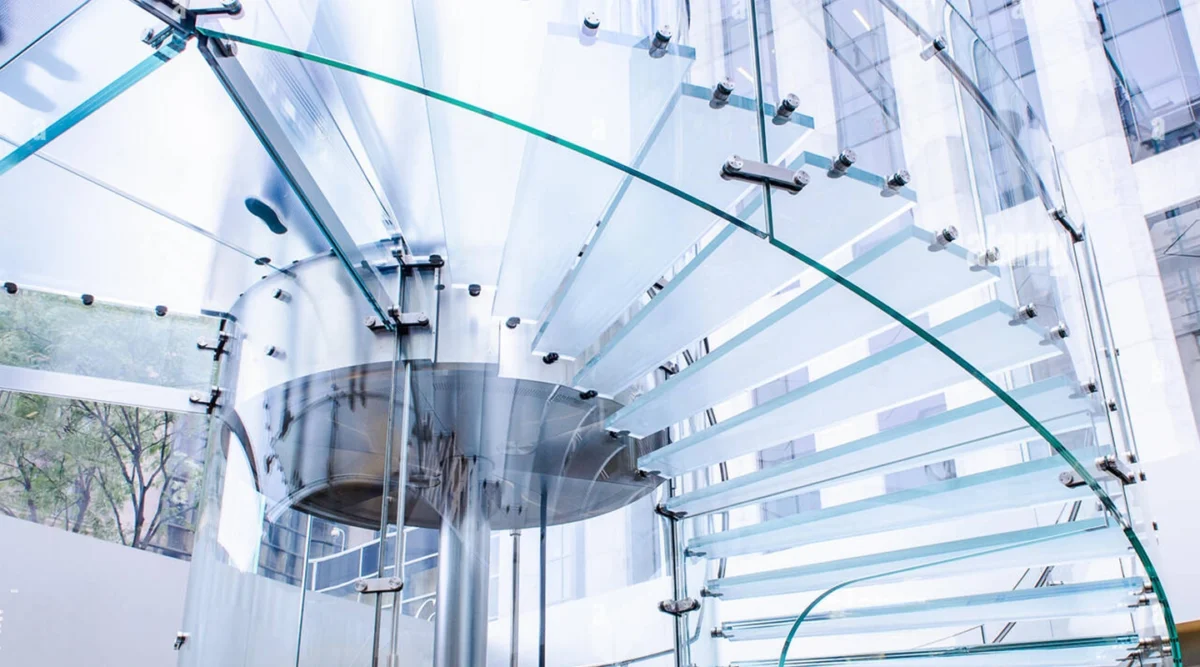
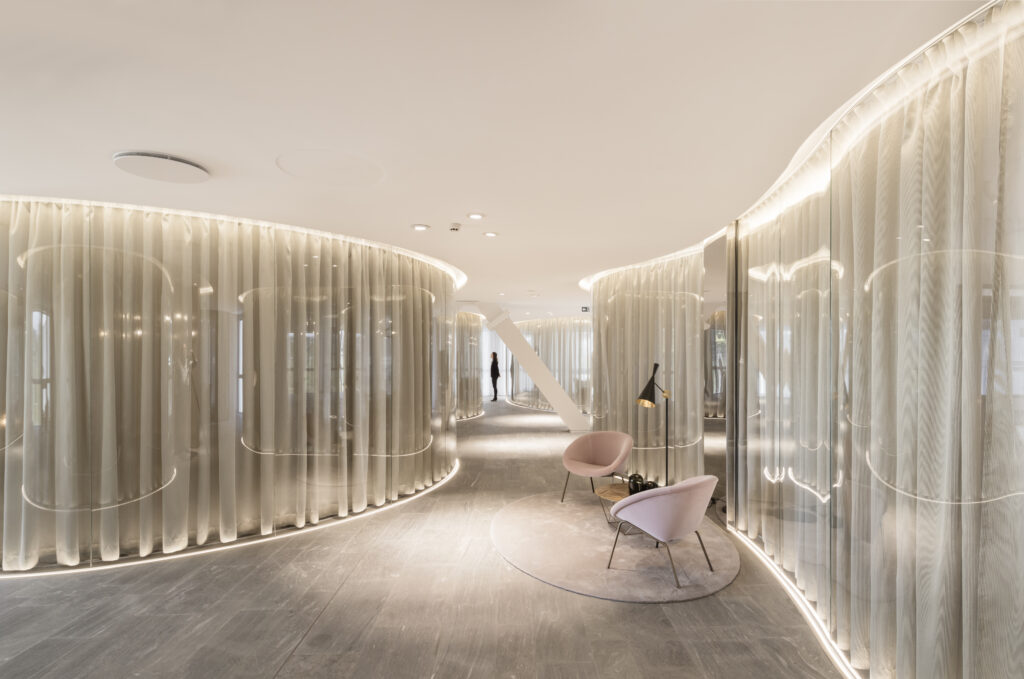
A notable example is a particular staircase we designed for a major global leader in technological instruments such as computers, smartphones, and tablets. In this case, our contribution was the metal structure that surrounds a huge glass “tube” placed inside a room.

The interlayer, along with the glass, becomes an important and wonderful example of how metal can accompany transparency to create architecture that stimulates the imagination and enchants the visitor.

Also known as “transparent armor,” bulletproof or ballistic glass is a transparent material specially designed to resist the penetration of blunt objects and projectiles.

The creation of this type of ballistic glass typically follows a specific formula: two or more types of glass are combined depending on the required level of protection.

Those who know us understand that few companies in the world are able to offer high-end, sophisticated, and highly resistant glass.

Although, by its nature, a glass will never be entirely impenetrable, thanks to our technologies and continuous research, we are able to offer a product that exceeds the normal market standards.

From Automakers to Installers: Who Are Our Most Loyal Clients

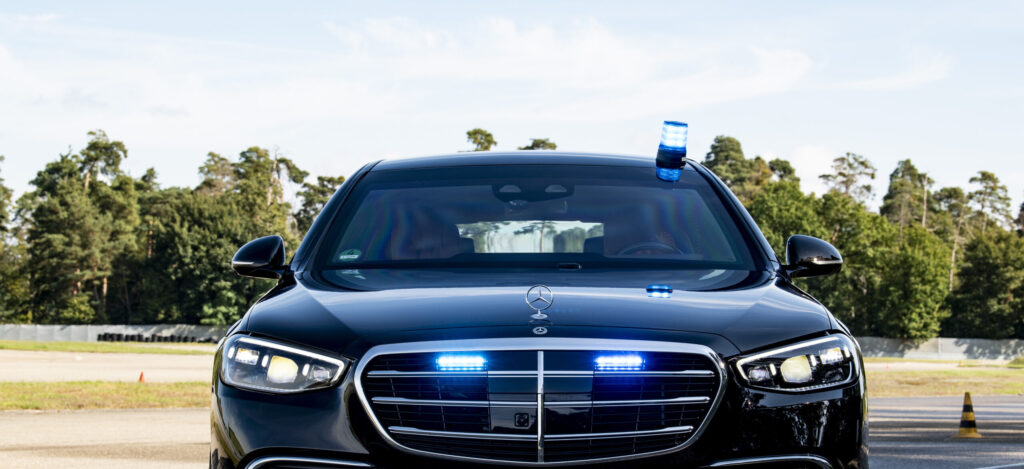
Who installs ballistic glass? And more importantly, who requires it? Our collaboration with some of the most prestigious international automakers is one of our greatest achievements: Audi, Mercedes, and BMW are just a few of the high-profile brands that offer armored vehicles assembled directly in our facilities.

For some time now, we have also been working closely with body shops specializing in armored vehicle fittings and vehicle armoring (including aftermarket for standard vehicles). Even when choosing our “external” partners, we are very demanding.

The armorers must be certified for such operations according to OEM directives and must leave the basic characteristics of the vehicle unchanged.

The Protection Levels We Refer To

The VPAM, EN1063, and STANAG 4569 Ballistic Standards represent our reference standards for the production of ballistic glass intended for the automotive sector, both for civilian and military market products.

For the civilian market, the applicable standards are VPAM, for which we provide products with ballistic protection levels up to level PM10 (7.62x54R, with incendiary AP ammunition), and EN1063, more commonly used in the Italian market, for which we guarantee protection levels for all available classes, from the most common .44 Rem.Mag. and 7.62x39mm ammunition to the heaviest BR7 (7.62x51mm NATO).

For the military sector, the relevant standard is STANAG 4569, for which our products are designed to resist threats from both hard metal projectiles, such as tungsten carbide (WC), and fragments simulating grenade splinters (FSP).

Our clients not only require ballistic transparencies but also products capable of withstanding certain temperatures. Especially for the STANAG 4569 ballistic standard, the military vehicle must ensure protection for occupants at extreme temperatures, ranging from as low as -32°C to as high as +50°C.

A real challenge that requires innovation, technology, and experience.

Design and interior architecture are disciplines created to amaze the eyes of those who enter a space.

Shapes, geometries, heights, and structures intertwine with each other, imposing an originality that is often hard to forget. In this field, every element, even the most unexpected, becomes perfect for giving the location that charismatic and captivating touch that makes it unique.

After all, we know well that originality and style must be the key ingredients in every environment and every project.

Residences, lofts, government or corporate buildings, and yachts offer the perfect opportunity to play with imagination and create something truly unique.

One of the structures that creates amazing visual effects is the staircase, especially those without a metal structure. Let’s look at a practical example.

Between Curves and Technology

We are very familiar with the effect that staircases without a metal structure can create because we worked on a prestigious project where the staircase designed gave the environment an extraordinary touch.

For this global leader in technologies such as computers, smartphones, and tablets, we contributed by designing the metal structure that wraps sinuously around a huge “tube” of glass.

Designing an interlayer with such soft lines, forming almost an “S” shape between glass and steel, is not at all simple. We used all of our knowledge to create a lightweight structure that perfectly supports the glass steps without weighing down the room, but rather giving it that charm typical of spaces designed by visionary architects.

How to Capture the Gaze

The beauty of this project lies not only in the fact that we created a staircase without a complete and invasive metal structure but also in the contribution we made to shaping something very, very innovative.

The spiral structure captures the gaze with a faceted cut, very geometric but softened by the interlayer, offering more gentleness to the severity typical of glass.

To create an even more striking effect, such a structure can be combined with a décor style that plays with abstract art and imaginative colors.

The result will undoubtedly be impeccable.

Just like in this company.

Have you ever had to clear the fog from your car’s windows with your hand because of poor visibility caused by condensation that forms on the windshield in certain environmental conditions? Or have you ever seen a touring car racing driver do it with a windshield brush while speeding at high velocity on a race track?

This happens in both cases when anti-fog systems are not used to prevent this issue. It occurred to a driver during a Supercars Championship race: a camera inside the cockpit captured the driver cleaning the windshield with a brush to remove condensation and continue his race on one of the most famous circuits of the Australian championship.

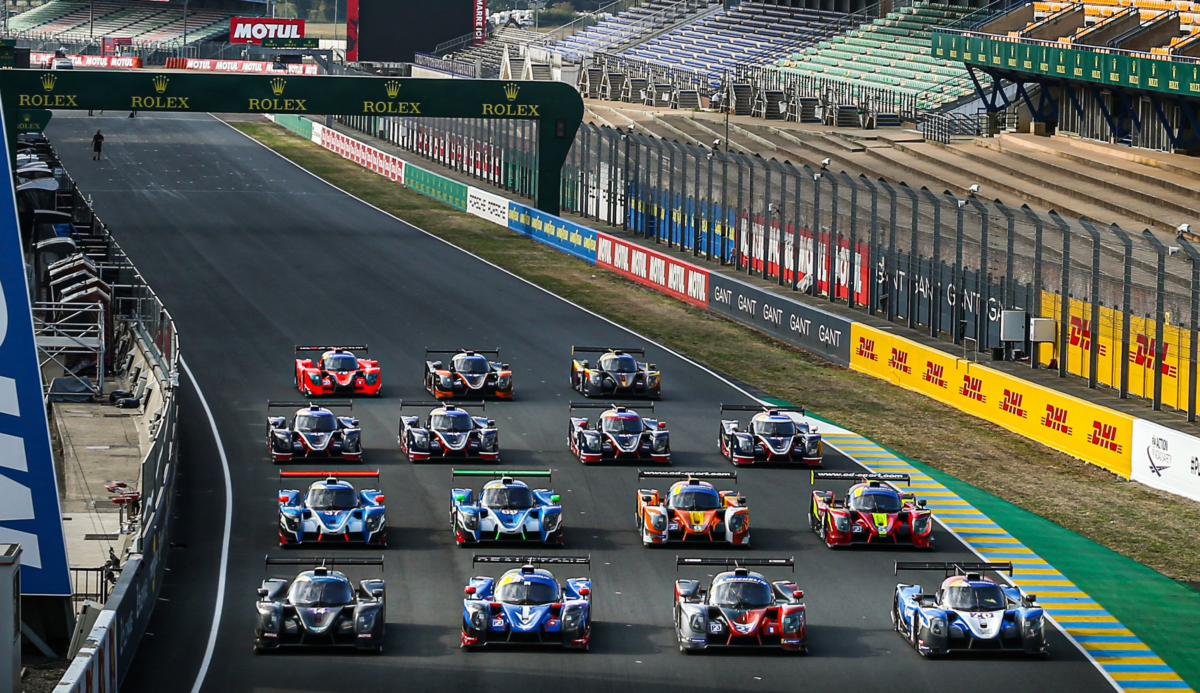
What can be done in these cases? Choose an Isoclima product, just like the company Gen3 did when they proposed our glass to racing car manufacturers.

Isoclima x Gen3

For the company Gen3, we produced a heated polycarbonate windshield, which is our answer for those looking for anti-fog systems for racing cars. In these vehicles, air conditioning systems that typically eliminate condensation from the windshield under normal conditions are removed to minimize the vehicle’s weight.

This heated windshield has a huge advantage in critical weather conditions: it doesn’t fog up. This is the windshield that the Supercars Championship driver would have surely wanted when he was cleaning his windshield with a brush while driving at over 200 km/h. If his team had requested our windshields before the race, the visibility would have remained intact even in the most challenging conditions, allowing the driver to focus solely on driving.

The Gen3 company expressed great satisfaction with our prototypes, which passed anti-fog tests even in extreme rain and humid environments.

Transparency and Durability: Must-Haves for the Automotive Sector

When it comes to automobiles, whether for racing or daily use, the glass must have a common characteristic in all cases: it needs to be transparent and also durable. This holds true even when designing anti-fog systems for cars, where visibility should never be sacrificed for the strength of the glass. The polycarbonate windshields we’ve designed are 250 times more resistant to impact than a regular glass windshield.

Gen3 presented our glass to the Supercars Championship, and it was a success among the drivers: our windshields showed no fogging or mist, offering crystal-clear visibility.

A winning product, without a doubt.

In 2022, the group reaffirms its leadership in the bulletproof glass sector

“2022 is proving to be a year of resurgence for Isoclima, following the difficult period we all faced in the previous two years. But at the same time, it is a year of consolidation and marks a crucial step toward a five-year period of growth in markets and niches that align with the company,” says Daniele Santi, Commercial Director of Isoclima, thus emphasizing the Group’s leadership in the production of high-quality glass and transparent surfaces, highly technological products that stem from an engineering process undertaken in collaboration with the customer. “We are experiencing exponential growth in the nautical sector, which is driving us to organize strategic activities for adapting our organization and plants,” Santi explains. “More generally, I can confirm that our focus is increasingly on the future: we’ve been innovating since 1977, the year the company was founded, and we’ve never stopped embracing challenges.”

Today, Isoclima Group operates 7 production plants, holds 120 patents, employs 1,100 people (with 100 new hires in the first quarter of 2022), serves over 500 customers, and produces 500,000 square meters of glass. Specifically, the company provides transparent solutions for protection – in glass, polycarbonate, or acrylic – for applications ranging from armored vehicles to helicopters, luxury cars to yachts, rail transport to aerospace.

The company’s expansion began in the mid-1990s with the acquisition of other major glass industries in Mexico, and in the early 2000s, in Croatia. Since 2017, the entire multinational group has been part of the Stirling Square Capital Partners investment fund. In 2021, the company acquired the U.S. firms Dlubak Specialty Glazing Corporation (Pennsylvania) and Global Security Glazing (Alabama), which were merged under the single control of Isoclima Specialty Glass LLC.

But how is glass made resistant to impacts and mechanical stresses? “There are essentially two processes that allow this: chemical tempering and thermal tempering,” explains Santi. “Chemical tempering works differently from thermal tempering, although the final product is the same. At Isoclima, we decided to invest in chemical tempering because it is more aligned with our core business. On this front, 2022 represents an important turning point for us. We installed, at our Este plant, a facility capable of processing sheets up to 10 meters long. It is undoubtedly the largest plant in Europe, if not worldwide. And the results were immediate: the laminated spherical glass destined for the naval sector is a high-engineering and aesthetic product with unique characteristics, such as multi-radius 3D curvature, perfectly aligned and precise dimensions and geometries, ensuring a final performance that unmistakably bears our signature.”

But that’s not all. “Sustainability is also part of our strategic development plan, and its annual performance is communicated through the ESG Report. There are numerous ongoing projects and initiatives guiding us on a virtuous path of designing sustainable products, both by responding to market demands and by supporting customers in pushing in this direction, along with fostering a virtuous internal behavior,” concludes Santi.

When global warming, resource waste, limited availability of resources, and the urgent need for companies to adopt environmental protection policies were just small snippets in the news rather than front-page headlines, we had already embarked on the path of sustainable glass production.

In this and many other areas, we can proudly say that we are at the forefront. From the start, our products have followed the footsteps of a company that is constantly evolving in terms of technology, execution, and processing, aiming for better environmental sustainability.

Our Earth Protection Policy

We have focused on ESG (Environment, Social, Governance) topics since the founding of our company. Our policies for sustainable glass production continue at a steady pace, in a structured manner, and environmental and social initiatives have always been an integral part of the Isoclima Group, both in Italy and abroad. We continually direct resources to our R&D department to find alternative design solutions that reduce the environmental impact of our products.

An example? The development of solar radiation control systems that effectively filter ultraviolet rays or infrared rays, promoting energy savings and, consequently, reducing atmospheric emissions.

The Benefits of Choosing Our Products

It’s simple: lighter glass reduces the weight of the structure it’s mounted on, leading to less fuel consumption and a decrease in the use of air conditioning systems. Reducing heating within spaces through glass not only improves comfort for the customer but also serves as an important contribution to protecting our environment.

We continue to invest in technologies and machinery to reduce the thickness and weight of the glass surface, subjecting it to thorough testing focused on reducing energy consumption.

Sustainable glass production is a responsibility that we, as industry leaders, feel compelled to uphold in order to strengthen the adoption of virtuous business practices that benefit the environment.

If we were to rank materials based on their exceptional characteristics, polycarbonate would undoubtedly be near the top.

It’s a thermoplastic polymer with high transparency, superior ductility, impact resistance, and lightness. It might sound contradictory, but it’s true: this transparent material is incredibly tough, which is why polycarbonate is the primary choice for aerospace windshields.

It’s used in contexts where resistance that other transparent materials can’t offer is required, such as when impact with birds—”bird-strikes”—occurs, making it a key component in helicopters and fighter jets.

Technical Characteristics of Polycarbonate

We can’t discuss the use of polycarbonate for aerospace applications without highlighting its technical characteristics. After all, such a high-performance material possesses properties that are interesting to explore.

Let’s start with its resistance: in this field, polycarbonate is unrivaled. Its impact resistance is 40 times greater than acrylic and 10 times greater than PETG and other transparent thermoplastic polymers.

It is also a flexible material, with a high elongation at break, from 80% to 160%, and a density that is half of glass (1200 kg/m³ compared to 2500 kg/m³). Chosen for its transparency, polycarbonate has high light transmission, even exceeding 90%, low water and humidity absorption, and good heat resistance, with a glass transition temperature of around 145°C, which is rarely found in other transparent thermoplastics.

Supporting Speed Without Danger

As evidenced by the characteristics listed above, polycarbonate is the material of choice for the aerospace sector. This is because it’s inevitable that dangerous incidents, like bird-strikes, occur during flight, and these are currently the primary threat to the aerospace industry. When analyzing different parts of an aircraft, the windshield and canopy are the areas most impacted by bird strikes.

Have you ever wondered what the impact speed of a bird can be? It can reach speeds of 250-350 km/h, depending on take-off and landing speed. Most bird-strike incidents occur during these two phases, causing surface cracks or punctures to the windshields and canopies, posing significant risks to the pilot and passengers.

Polycarbonate, processed with innovative methods, allows us to anticipate these dangers, providing high-performance surfaces in terms of both resistance and visibility.

The aerospace sector is fraught with challenges and hazards that pilots must carefully navigate. One such hazard is a bird strike, the term used to describe the impact between an aircraft and a bird, often resulting in significant damage to both the aircraft and its crew.

On November 22, 2021, a bird strike incident occurred involving the Leonardo AW169 N307TC air ambulance of STAR Flight (Travis County Emergency Medical Services). The helicopter collided with a vulture near Austin, Texas, during a critical patient transport mission.

This incident was not part of an aerospace exercise but involved the transportation of injured passengers. The extraordinary and dangerous impact was mitigated by the certified resistance of Isoclima glass, which was installed on the Leonardo AW169.

The Dynamics of the Leonardo Air Ambulance Bird Strike

Before the impact, a medical crew member spotted the bird, which continued on its flight path. To avoid a direct bird strike, the pilot maneuvered left to prevent the bird from crashing into the right front windshield. This action minimized the severity of the impact, which occurred a few seconds later in a less vulnerable position for the onboard personnel.

Following the collision, the pilot in command decided to divert the landing from Seton Main Hospital to the STAR Flight Hangar Helipad (TE94), located just over a minute away from the collision site.

Bird Strike: Designing Glass to Withstand Bird Collisions

The helicopter landed safely, ensuring the protection of both the rescued passengers and the flight crew. The positive outcome was attributed not only to the pilot’s swift reaction but also to the high-performance glass that prevented the bird from breaching the cockpit.

Upon landing, the Leonardo AW169 displayed the following damage:

  • Damage to the right front windshield
  • Cracked windshield support beam
  • Cracked greenhouse window
  • Undetermined surface damage to the main rotor blade

To withstand bird strikes, the glass installed on the AW169 must comply with CS-29 Amendment 2, dated November 17, 2008. According to this amendment, the primary requirement mandates that the aircraft must be capable of continuing flight and ensuring a safe landing after a collision with a 1 kg bird.

Vultures, however, are significantly larger birds, weighing between 0.8 and 2.41 kg—far exceeding the weight outlined in CS-29 regulations.

Our glass surfaces successfully withstood a violent impact, exceeding certification requirements. This was a crucial event for us, as it played a vital role in saving lives.

Those who have already tried our products know it well: the thickness of Isoclima’s anti-break glass is so secure that it ensures protection even in the most dangerous situations. To achieve these results, we have invested energy and resources into our Research & Development department, where we applied all of our knowledge to ensure the most suitable thickness for conditions involving external attacks. How does our technology work? Through tests, standards, and mechanical trials, our glass undergoes numerous analyses that guarantee superior quality.

How Isoclima Glass Is Produced

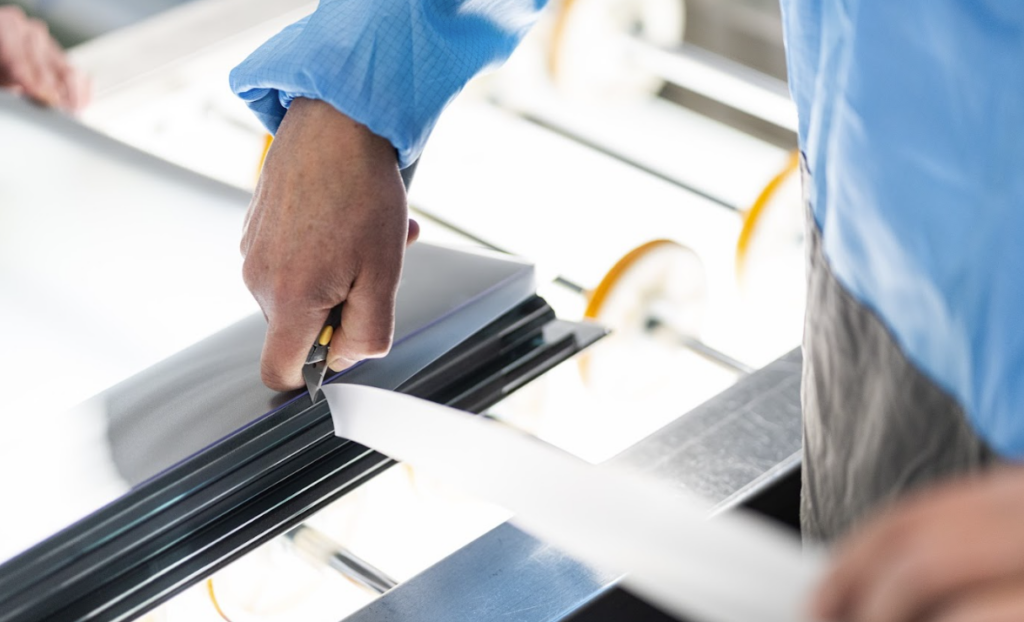
The thickness of anti-break glass is an element that requires a lot of attention to be suitable for what the client requests. As a result, our glass is often made from original surfaces that are transformed through our technologies into anti-break glass. In this phase, we either reinforce the original glass or add materials to it, making it “impervious” to any external stress. One of the advantages lies in the quality of the product: an Isoclima-branded glass has a long lifespan because it results from production processes in line with the strictest rules set by the original manufacturers.

Even though the anti-break glass is thick, it does not affect the structure on which it is mounted. In the case of a vehicle windshield, the thickness is minimal enough to not require design modifications or adjustments to the window’s sliding system. This is achieved through product certification in accordance with international and national standards, and through the protection of those involved in the testing phase.

Safety Always, Even During Testing

One aspect we haven’t discussed much is the safety protocols we follow during the testing phase of our products. We cannot simply guarantee the thickness of our anti-break glass; we must also take care of the safety of those actively involved in our production within our facilities. Our safety protocols list the risks associated with conducting such tests, specifying the potential dangers for each phase. To prevent these risks, we equip our workers with all necessary personal protective equipment, ensuring their safety and minimizing unpleasant incidents.

Because the protection of people is and always will be our top priority.