Isoclima
23/01/2024
Share this post
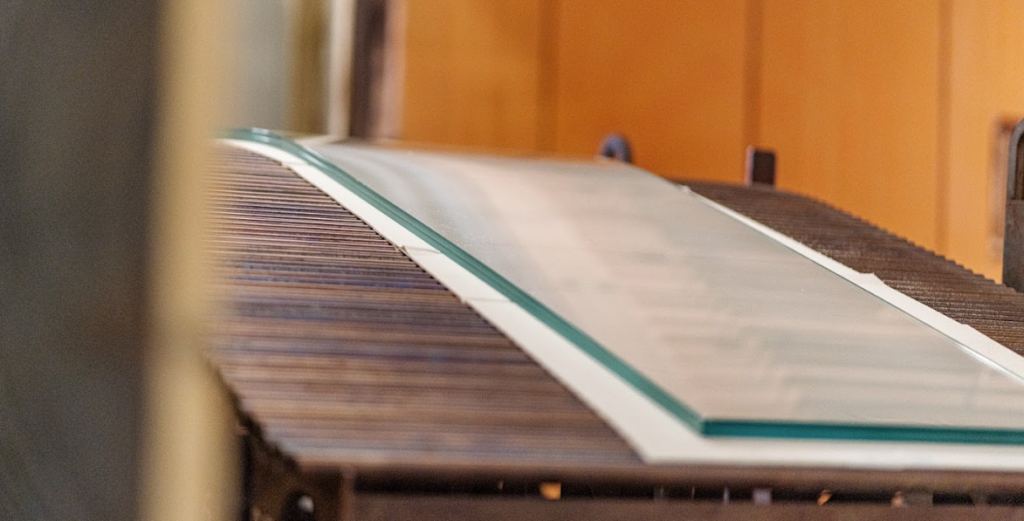
The evolution in glass production has reached extraordinary heights with the introduction of tempered curved glass. These remarkable glass panels, made through a combination of advanced bending and tempering techniques, offer a level of design and strength that exceeds expectations. This exceptional product has opened new possibilities in the world of architecture and design, making it possible to create curved surfaces that are both safe and durable.
Characteristics and Features
One of the most distinctive characteristics of tempered curved glass is its ability to resist deformation caused by the curvature. Thanks to sophisticated manufacturing processes, the glass is heated to controlled temperatures, allowing it to be molded into curved shapes without compromising its strength. This makes tempered curved glass suitable for applications where shape is crucial, such as iconic building facades, balustrades, guardrails, partition walls, or design decorative elements. Additionally, tempered curved glass maintains all the safety features inherent in standard tempered glass.
In the event of breakage, it shatters into small, non-sharp granules, minimizing the risk of injury. This property makes it an ideal choice for environments where safety is a priority. For example, it is often used in public spaces such as shopping malls and airports, where the combination of design and safety is essential.
Extraordinary Applications and Cutting-Edge Design
Tempered curved glass has opened new horizons in architectural design and is increasingly used in the nautical sector. Its fluid, sinuous shapes allow for the creation of iconic buildings that challenge traditional architectural conventions and in mega yachts. This innovative technology has enabled architects to express their creativity in ways never seen before, creating unique and extraordinary spaces.
Beyond architecture and nautical applications, tempered curved glass is also used in interior design, helping to create modern and immersive environments. At Isoclima, we are leaders in the production of large-sized tempered curved glass, a clear example of how technological innovation can transform a traditional material like glass into an extraordinary product. Its ability to combine curved shapes with exceptional strength makes it a design element like no other. The wide applicability in sectors like architecture and the nautical industry reflects its growing popularity and the excitement it generates among architects and designers worldwide.