Isoclima
17/03/2022
Share this post
Three innovative solutions that are part of our transparencies—three concrete examples to present a brief but insightful roadmap of Isoclima’s projects.
One of the characteristics that set us apart in the market is our versatility—we might even say our ‘chameleon-like’ adaptability. For every project, we always manage to find a precise and specific solution that combines high product quality with customer requirements. While many know us for our work in the automotive industry, such as electrically dimmable glass, our expertise is also sought in other prestigious sectors like yachting and aerospace. These three examples are tangible proof.
Directly from the Future: Variable Transparency
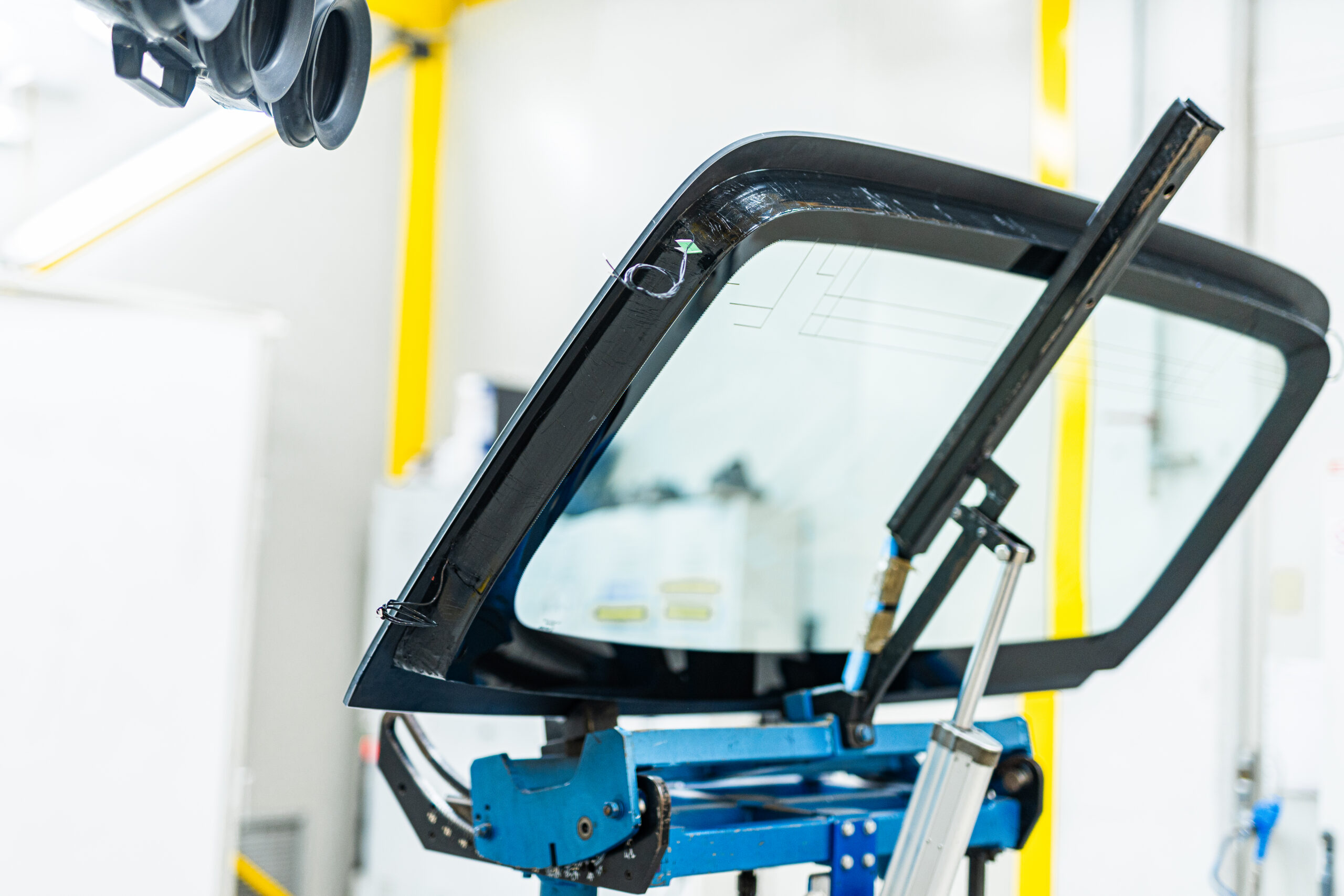
Have you ever heard of variable transparency? It is a technology that allows optical properties to be modulated through human or artificial intelligence. The key drivers of this innovation are comfort and the technological challenges posed by customers across various sectors. This technology functions as an optical window within the electromagnetic spectrum, with the ability to control transmittance in both the visible and infrared range. This allows users to choose between visibility or privacy while regulating the amount of solar radiation that enters a space.
Lightweight, Thin, Yet Resistant: Our Glass for Human Safety
It may sound like a paradox, but it’s not. How can a lightweight and thin glass protect people? The answer lies in cutting-edge technology. Our transparencies safeguard against both intentional and accidental threats, ensuring maximum safety for people and objects within a given environment. This is achieved by employing front-end technologies that minimize weight and thickness without compromising exceptional resistance. Just like electrically dimmable glass, scientific advancements play a crucial role, alongside meticulous design and manufacturing expertise. We push glass to its limits to achieve the necessary performance against threats while also reducing weight and space requirements.
Transparencies That Communicate
It is a paradigm shift to think of glass surfaces evolving from passive design elements to active, connected components capable of receiving and transmitting information. We are developing products that are increasingly interconnected, enabling communication and the activation of specific functions. Specifically, electronic and photonic devices, such as integrated sensors and interactive displays, are embedded within the glass, allowing it to connect and exchange information.
If electrically dimmable glass seems futuristic, imagine something even more advanced. The future is already here, and at Isoclima, we are proud to be part of it.