Isoclima
19/05/2022
Share this post

For several years now, glass manufacturers have had to contribute to reducing the energy consumption of buildings and boats, both for heating and cooling indoor spaces.
Today, products are undoubtedly more efficient and innovative, the result of meticulous design that leverages all available technological resources to achieve outstanding results from multiple perspectives.
The concept of solar radiation control is becoming increasingly relevant, fostering a holistic approach to environmental protection, where even the structure itself is designed to prevent energy dispersion. The energy performance of glass naturally depends on the amount and type of solar radiation it is exposed to, which is why understanding infrared radiation and how to block it is crucial. We have developed extensive know-how in this field, and we are happy to provide you with a brief overview.
Our Versatile Solutions
What is the primary goal of a glass pane installed in a building or on a boat? It is to allow visible light to pass through while simultaneously blocking other types of radiation, such as ultraviolet and infrared rays.
Let’s distinguish between the two types of radiation.
Ultraviolet radiation is the main cause of photochemical degradation of materials (leather, wood, fabrics, plastics, and so on), which is why, in many cases, it is essential to block it.
On the other hand, infrared radiation is an electromagnetic wave that directly affects thermal comfort (and can cause overheating inside buildings).
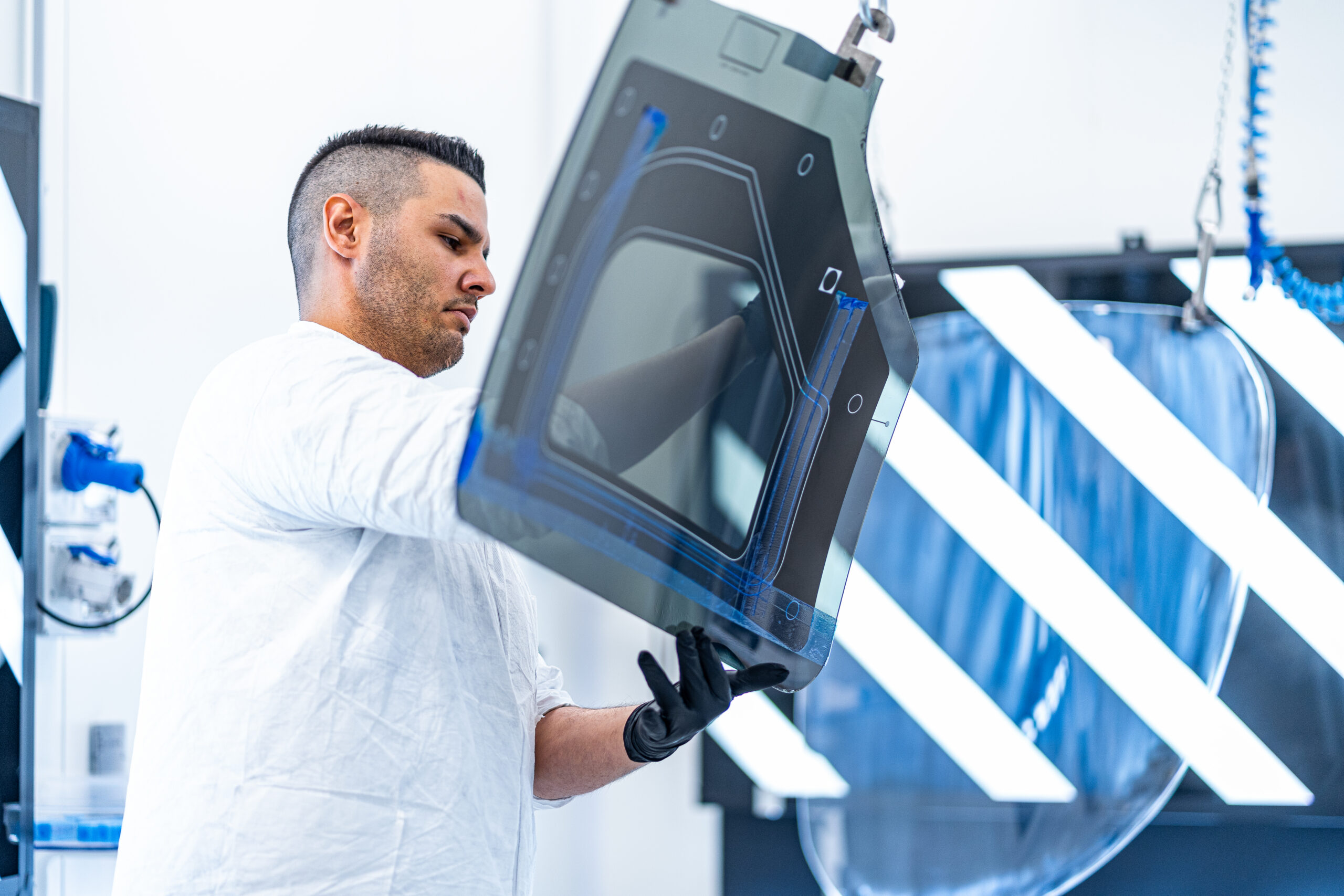
Our technological offering for solar radiation control consists of integrating sun protection elements into laminated glass solutions. Specifically, we use advanced lamination technologies that combine heterogeneous elements, allowing for maximum visibility of the surrounding landscape without compromising the aesthetics of the structure where the glass is installed.
Two Solutions Are Better Than One
Since we always strive for excellence in our production, we have developed two systems for solar radiation control, both highly effective in filtering short-wave and long-wave infrared radiation while promoting energy savings—an essential factor for our planet.
The two systems we offer are:
- The use of a high-selectivity multilayer coating applied to the glass
- The application of plastic films and selective filters within the glass
As our products are always customized and precisely tailored to our clients’ needs, we assess each case individually to determine the most suitable solution based on the intended application.
In the next article, we will delve deeper into the characteristics and benefits of coatings and film applications.