Innovation & Tech
4 min read

Isoclima Group
21/08/2026
Share this post
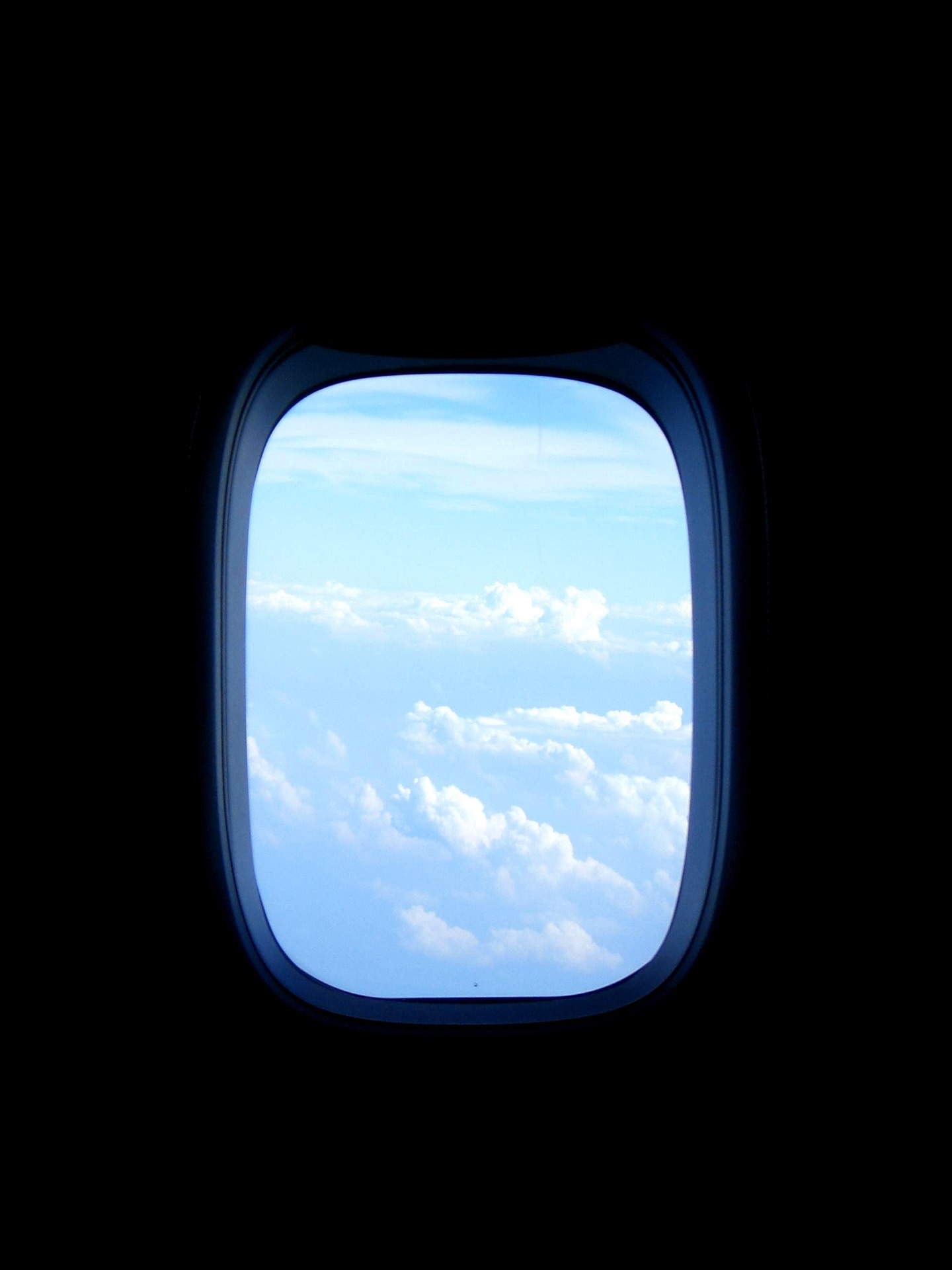
Aircraft windows are not simple transparent components. They are structural elements. They must withstand extreme stresses and guarantee passenger safety throughout every phase of flight. For this reason, their production requires specific materials and rigorous engineering processes. In addition, every stage is subject to strict international regulations.
In this article, we look at the technical characteristics of aircraft windows. We explain which materials are used and which regulations govern the sector.
Why aircraft windows are special
Aircraft windows operate in conditions very different from glass used in construction or the automotive industry. During flight, an aircraft reaches cruising altitudes above 10,000 metres. At that altitude, the outside temperature drops to around -50°C. Atmospheric pressure, moreover, is much lower than the pressure inside the cabin.
This pressure difference creates a constant load on the window. The component must maintain its integrity for the entire duration of the flight. Vibrations, rapid temperature changes and, occasionally, impacts from debris or birds add to this load.
For these reasons, every aircraft window is a multi-layer system. Each layer has a specific function: structural strength, thermal insulation, UV protection and safety in the event of breakage.
Materials: laminated glass, acrylic, polycarbonate
The choice of materials for aircraft windows depends on the component’s position and the required performance. Here are the three main materials:
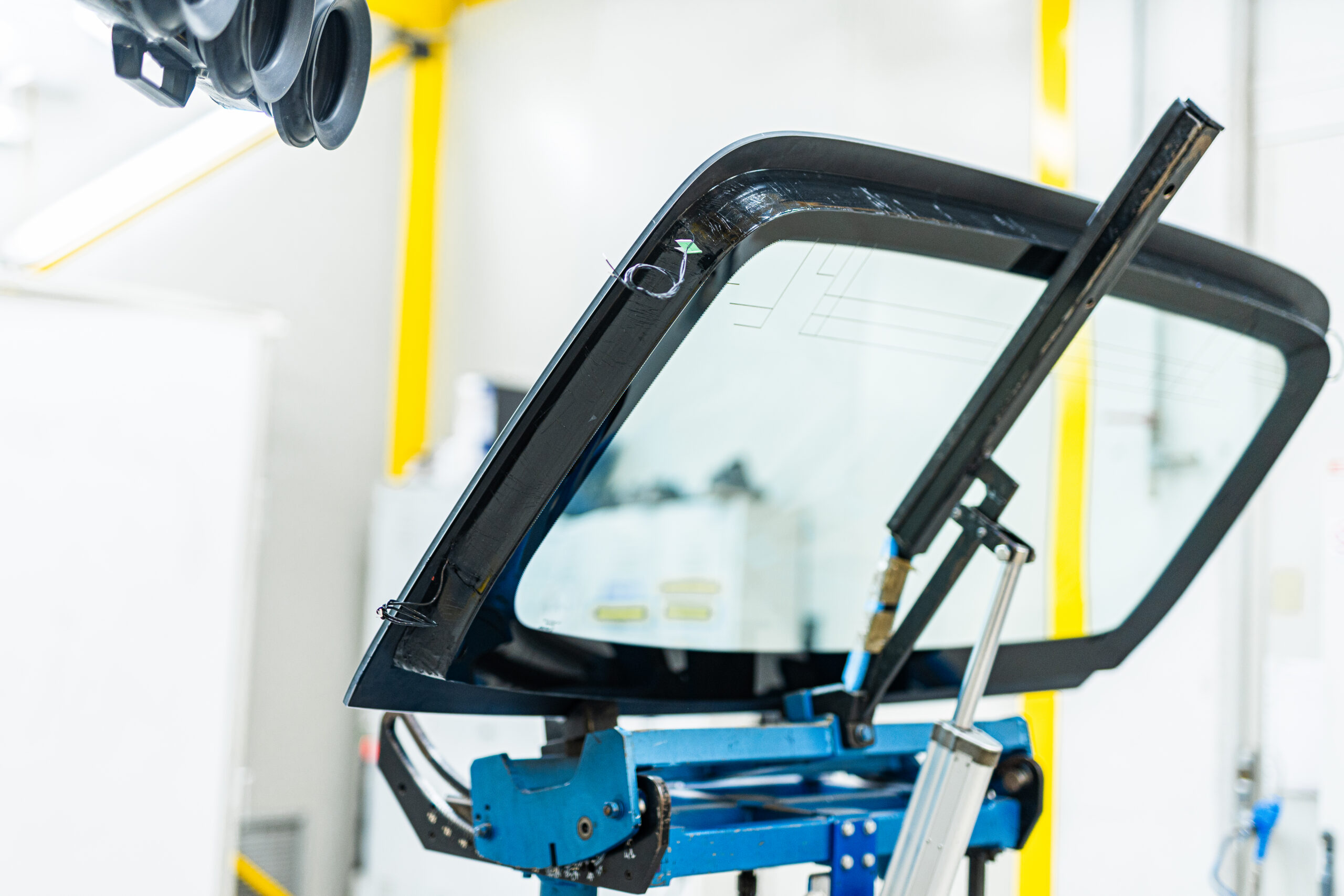
- Laminated glass. Manufacturers use it mainly for cockpit windshields. Here, mechanical strength and optical clarity are the priorities. Laminated glass consists of several layers alternated with polymer interlayers. These layers absorb energy on impact and hold the panel together even after partial breakage.
- Acrylic (PMMA). It is one of the most common materials for passenger windows. It offers a good balance of light weight, transparency and cost. Its optical properties are excellent, but it withstands impact less well than other polymers.
- Polycarbonate. Designers choose it when impact resistance is the priority. They use it, for example, for ballistic protection or high-energy impacts, such as in the defence sector. It offers greater mechanical strength but requires specific surface treatments against scratching.
In many applications, manufacturers combine these materials into layered structures. This way, they achieve the best balance of weight, strength, durability and optical quality.
Differential pressure and strength
Managing differential pressure is one of the most critical aspects of window design. This term refers to the difference between the pressure inside the cabin and the pressure outside at altitude. The load acts continuously throughout the flight. As a result, it must not compromise the structural integrity of the component.
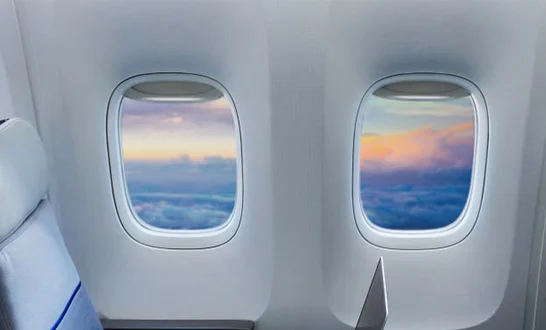
For this reason, passenger windows generally have three panes:
- An outer structural pane.
- An inner safety pane, which acts as a backup if the outer pane fails.
- An inner trim pane, non-structural, with an aesthetic and protective function.
A small breather hole in the middle pane equalises the pressure between the two chambers. This also reduces condensation build-up.
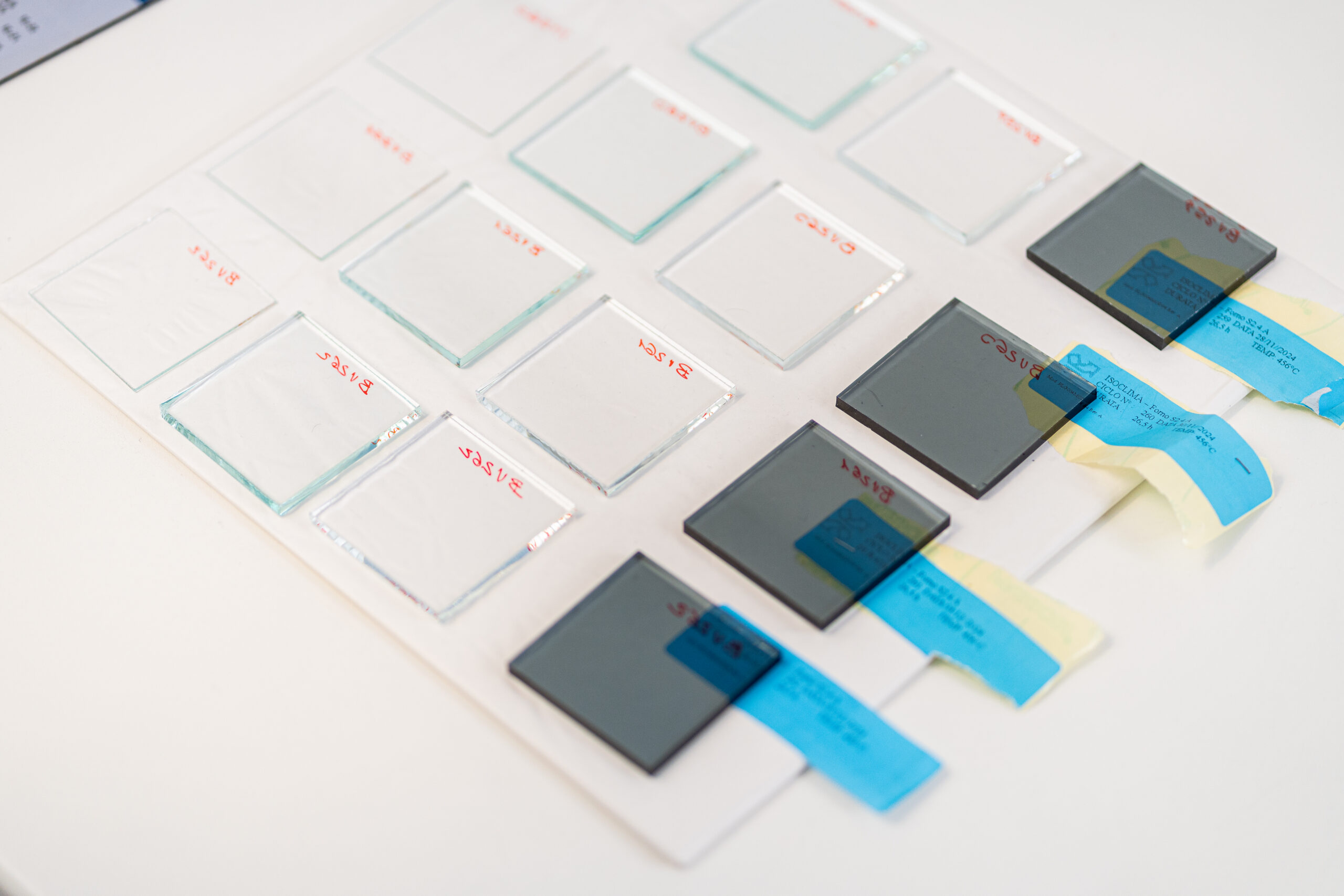
Every component undergoes rigorous strength testing. Engineers simulate repeated pressurisation and depressurisation cycles. They also carry out impact tests and extreme-temperature resistance tests. Only in this way can they verify compliance with the safety margins required by the industry.
FAA/EASA regulations
Bodies such as the FAA (Federal Aviation Administration) in the United States and EASA (European Union Aviation Safety Agency) in Europe regulate the production and installation of aircraft windows. Both define detailed technical requirements. These requirements cover mechanical strength, failure behaviour, fire resistance and compatibility with other aircraft systems.
Federal Aviation Regulation Part 25, for example, applies to transport-category aircraft. This regulation sets the minimum criteria that windows must meet. These include load resistance, structural redundancy and post-failure behaviour. Compliance with these requirements is a prerequisite for obtaining airworthiness certification.
Certification process
The certification process for a transparent aviation component involves several stages.
First, designers define the requirements based on the applicable regulation and aircraft type. A laboratory testing phase follows, covering mechanical strength, impact resistance, extreme-temperature behaviour and ageing resistance.
After this phase, the relevant certifying body verifies the component’s compliance. It reviews the technical documentation and test results. Only at the end of this process does the body approve the component for installation on civil or military aircraft, in line with the aerospace industry’s international safety standards.