Global Trends
3 min read

Isoclima Group
04/09/2026
Share this post

Electrochromic glass is one of the most advanced solutions among smart glass technologies. It refers to intelligent glazing that can change its optical properties in response to an external stimulus. This technology makes it possible to dynamically control the light and heat passing through the glass surface. The result is precise control over visual and thermal comfort in the spaces where it is installed.
Originally developed for the automotive and aerospace sectors, electrochromic glass is now also used in civil construction, healthcare, and transportation.
Electrochromic Operating Principle
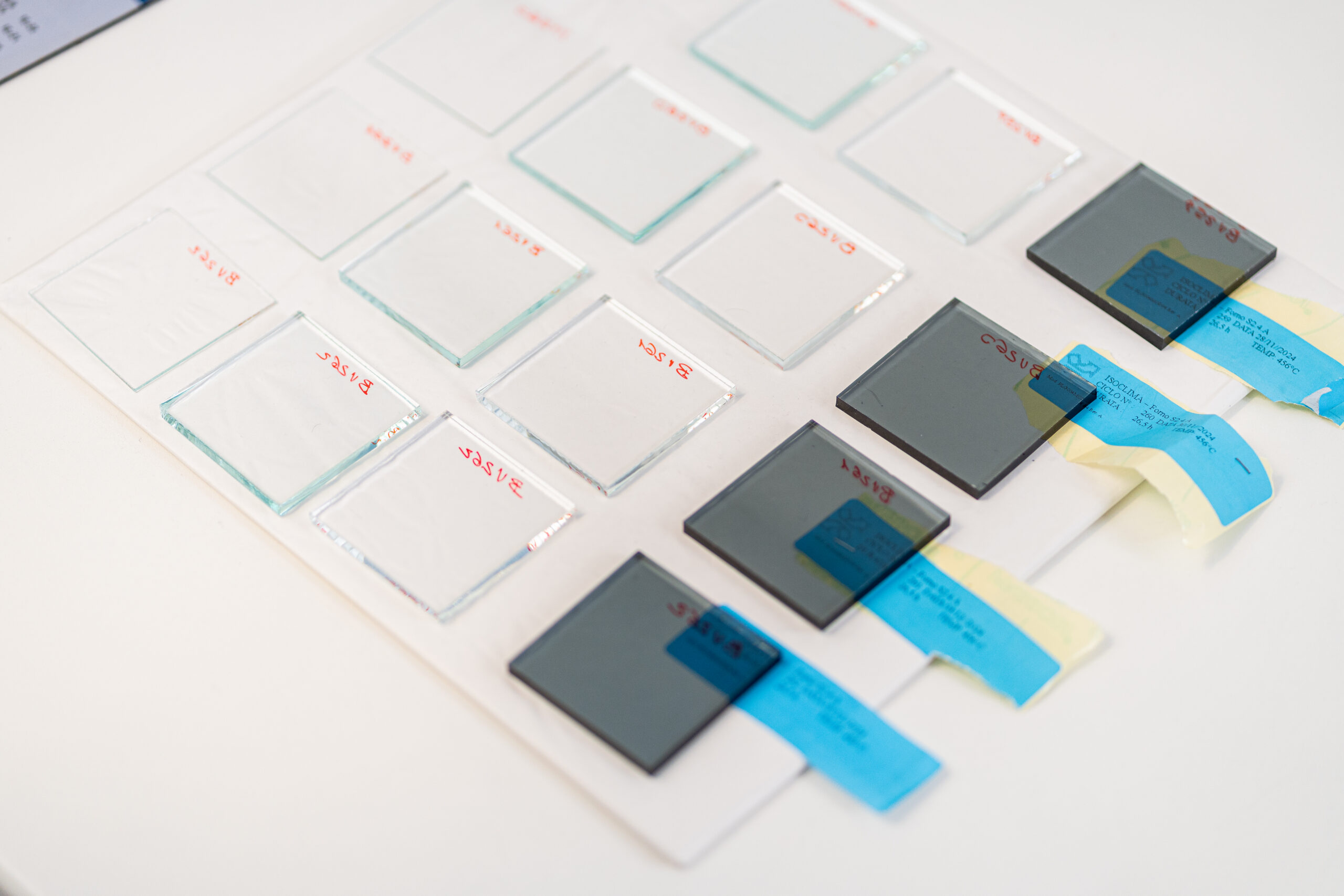
Electrochromic glass works thanks to a phenomenon called electrochromism. Certain materials change color or opacity reversibly when exposed to an electric voltage.
When a low-intensity current is applied, the ions in the active layer move between the different functional layers of the glass. This movement changes the amount of light passing through the glass. The process is fully reversible: simply stop or reverse the voltage, and the glass returns to its transparent state.
The transition happens gradually. This allows for intermediate levels of tinting, depending on the specific needs of the moment.
Glass Structure
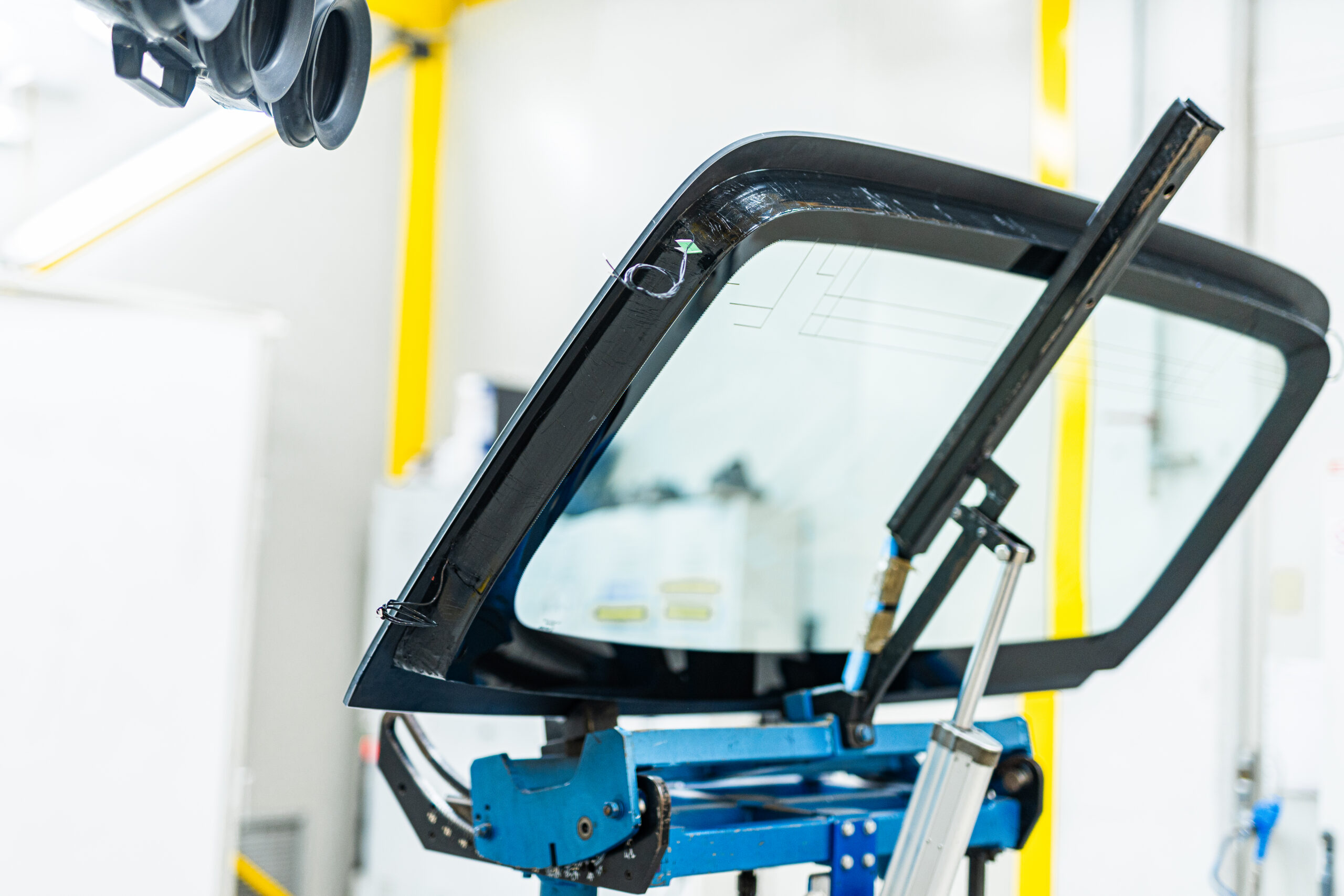
Electrochromic glass is made up of several thin layers, positioned between two panes of glass or other transparent material.
The active layer manages the color change. Next to it sit transparent conductive electrodes, which carry the electric current without reducing visibility. All these components are enclosed in a laminated structure, which ensures mechanical strength and protection from weather conditions.
This multilayer configuration allows electrochromic glass to be integrated into existing glazing systems. Safety and insulation properties remain comparable to those of traditional laminated or tempered glass.
Response to Light and Heat
Electrochromic glass manages visible light and solar heat at the same time. This is one of its main advantages.
By varying the tint level, glare is reduced and heat gain into interior spaces is limited during the hottest hours of the day. The benefit is twofold: greater energy efficiency and a lower load on cooling systems.
In colder periods, or with lower solar radiation, the glass can return to a clear state to let in more natural light. This optimizes ambient comfort without the need for curtains or blinds. Maintenance also benefits, since there are fewer moving mechanical parts to manage.
Applications: Offices, Hospitals, Aircraft
Electrochromic glass combines light control, thermal insulation, and the absence of moving parts. This makes it suitable for many different settings.
In offices, it is used for curtain walls and glazed partitions. The goal is to improve visual comfort for employees and reduce energy consumption related to space cooling.
In hospitals, it is used in operating rooms and patient rooms. Here it helps control privacy and brightness, without giving up natural light when needed.
In the aviation sector, electrochromic glass replaces mechanical window shades in aircraft cabins. Passengers can independently adjust the level of tinting. At the same time, the aircraft benefits from reduced overall weight.
Comparison with Other Smart Glass Technologies
Compared to other smart glass technologies, electrochromic glass offers a clear advantage: active control.
Thermochromic and photochromic glass react passively to external factors, such as temperature or light intensity. Electrochromic glass, on the other hand, can be controlled directly by the user or by an automated system. This provides greater flexibility for everyday use.
Compared to liquid crystal glass (PDLC), typically used for instant privacy, electrochromic glass also stands out. It offers a wider range of intermediate transparency levels. This makes it a suitable solution when gradual control of light and heat is required.