
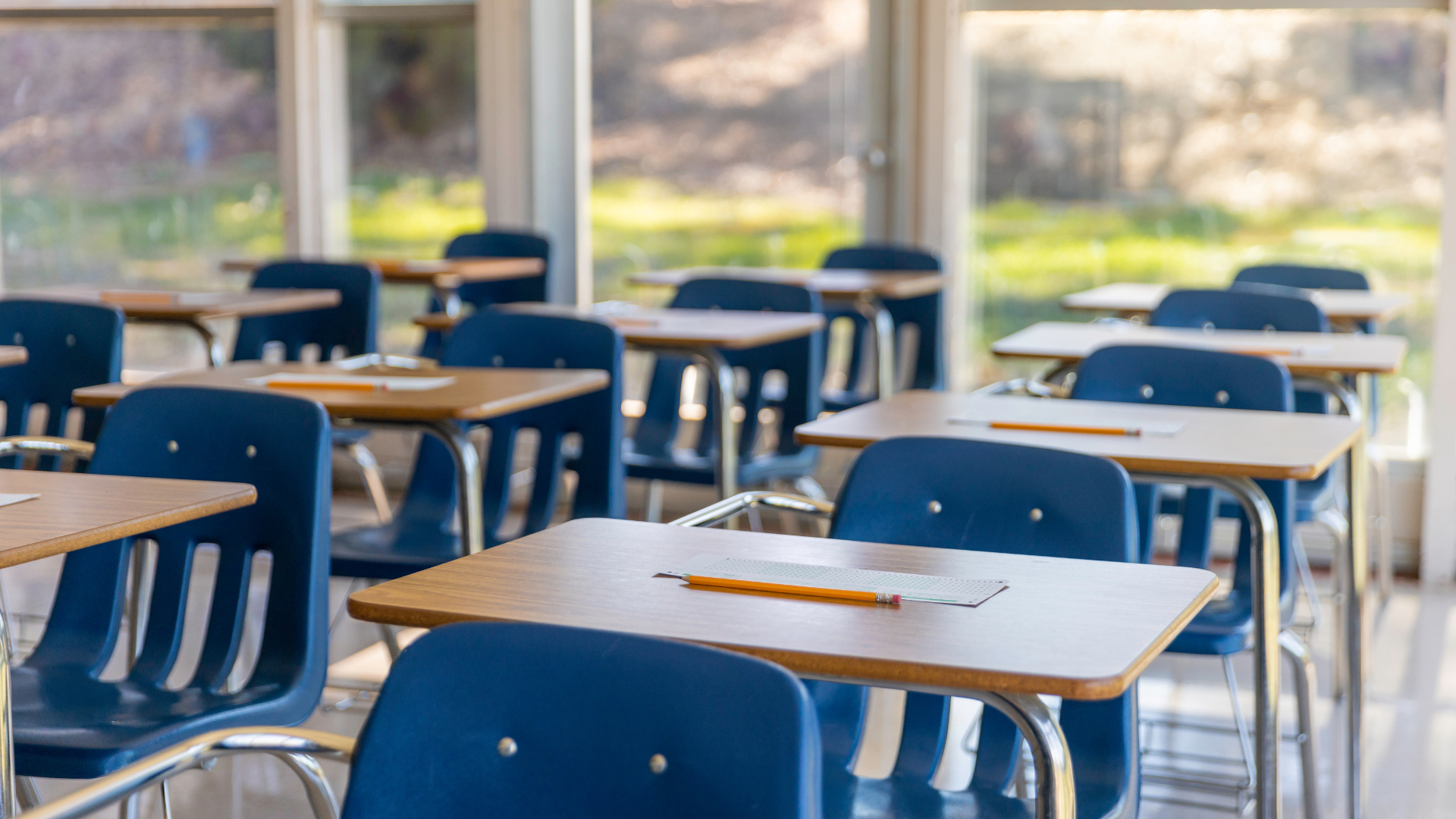
Glass is standard in U.S. schools. It brings daylight into classrooms, supports visibility, and helps spaces feel open. In many K–12 and higher education facilities across the United States, however, it can also become the fastest path inside during an unauthorized entry.
A 2024 survey of school safety professionals by Campus Safety Magazine found that glass doors and windows are the perimeter elements most likely to fail during an intrusion. Respondents also cited frequent breakage due to vandalism and unauthorized access attempts, reinforcing a persistent vulnerability across K–12 schools and college campuses.
When glazing fails quickly, other security measures lose effectiveness. The overall security of an opening depends on the glazing holding long enough for response procedures to take effect. For school administrators, facilities teams, and U.S.-based design professionals, this shifts the conversation toward how glazing performs under deliberate attack, not accidental impact.
Where Do School Security Plans Often Break Down
Unauthorized entries often begin at glazed openings. After hours, common targets include:
- Door vision panels
- Sidelights
- Ground-level windows
In many cases, only basic hand tools are used.
From the outside, these incidents may resemble vandalism. In reality, they show how quickly standard glazing can fail and how easily an opening can be created before other security measures or responders have time to act. In higher-risk U.S. school environments, security assessments indicate that glazing is often targeted first to weaken the barrier, followed by forced-entry attempts.
In both scenarios, glazing becomes the initial failure point, effectively creating a shortcut that allows an intruder to bypass otherwise code-compliant doors, locks, and hardware.
The challenge is not eliminating glass. Daylight, visibility, and supervision remain important in learning environments. The goal is to make sure glass functions as a time barrier, rather than an immediate access point, when attacked.
The Value of Delay
Time defines the outcome of an intrusion. According to FBI and ALERRT Center data, nearly 70 percent of active shooter incidents in the United States end within five minutes. More recent 2024 FBI data specific to educational settings shows an even shorter window, with the average incident lasting three minutes and 18 seconds.
With average U.S. police response times often exceeding seven minutes, school safety planning increasingly focuses on delaying entry. Creating a time barrier allows staff to:
- Secure occupants
- Initiate lockdown procedures
- Communicate with first responders
Standard safety glass, including tempered glass and basic laminated glass, can fail in seconds when subjected to deliberate force. Security-focused glazing systems engineered to remain in the frame under repeated impact extend that timeline.
A U.S. elementary school retrofit showed that replacing standard door vision panels increased breach time from seconds to several minutes, with no visible change to the building.
Is Code-Compliant Glass Enough?
Most glass installed in U.S. educational facilities meets life-safety requirements under ANSI Z97.1 or 16 CFR 1201. Tempered glass and basic laminated glass are designed to reduce injury during accidental impact by breaking in a controlled way. That performance satisfies code, but it is not intended to address forced entry.
Security glazing serves a different purpose. It is engineered to resist forced entry and remain in the opening under repeated physical attack. A school can comply with every applicable building and life-safety code and still have glazing that offers little resistance to unauthorized entry.
This vulnerability is most common in older U.S. school buildings, many of which were constructed decades ago before security risks influenced glazing selection. In those facilities, glass often becomes the weakest point in the building envelope, even when doors, locks, and hardware meet current requirements.
Targeted upgrades to specific areas can improve protection without requiring a full-facility renovation, including:
- Main vestibules
- Administrative suites
- Ground-level openings
Maintaining Daylight and Visibility While Improving Security
Concerns about school security often focus on appearance and atmosphere. Educators and parents want buildings that feel open and appropriate for learning. Daylight, visibility, and supervision remain core priorities in U.S. school design.
Security glazing is designed to support those priorities, functioning like conventional glass under normal conditions while resisting access during an attack.
How CHILDGARD® Fits into Educational Safety Planning
CHILDGARD® is a laminated security glazing system engineered to resist forced entry through a proprietary interlayer designed to remain intact under repeated physical attack. Developed specifically for U.S. K–12 educational environments, it addresses security performance expectations commonly applied in American schools.
Manufactured by Isoclima, CHILDGARD strengthens vulnerable glazed openings while preserving daylight, visibility, and the open character of learning spaces.
The system meets applicable safety glazing requirements and has been tested to recognized forced-entry standards, including ASTM F1233 and ASTM F3561. It integrates with industry-standard door, frame, and window systems and can be specified for both retrofit and new-construction projects requiring targeted security upgrades.
Learn More
Understanding how glazing performs under deliberate attack is an important part of educational safety planning. To learn more about CHILDGARD® laminated security glazing for educational environments, click here.
Frequently Asked Questions About Security Glazing in Schools
Is security glazing only used in K–12 schools?
No. Security glazing is used in preschools, K–12 schools, and higher education facilities across the United States. Applications vary based on building type, occupancy, and the results of a site-specific risk assessment.
Does security glazing replace other school safety measures?
No. Security glazing supports broader safety planning that includes access control, staff training, communication systems, and emergency procedures. It functions as part of a layered approach by providing additional time for other measures to take effect.
Is security glazing required by U.S. building codes?
In most cases, no. U.S. building codes primarily address impact safety intended to reduce injury from broken glass, such as ANSI Z97.1 and 16 CFR 1201. Security glazing is typically a performance-based decision informed by site conditions, security objectives, and local risk factors.
Can existing school buildings be retrofitted with security glazing?
Yes. Many schools retrofit door vision panels, sidelights, and selected openings using existing frames, provided the glazing pocket can accommodate the required thickness and the framing is properly anchored.
What is CHILDGARD® and who manufactures it?
CHILDGARD® is a laminated security glazing system designed to resist forced entry and remain in the opening under repeated physical attack. Developed specifically for educational environments, it is manufactured by Isoclima and used in U.S. schools to strengthen vulnerable glazed openings while preserving daylight and visibility. It has been tested to ASTM F1233 and ASTM F3561 standards.
School Glazing References
| Reference | Source | Link |
|---|---|---|
School security glazing vulnerability survey | Campus Safety Magazine | campussafetymagazine.com |
Active shooter incident duration data | FBI | fbi.gov |
Law enforcement response and threat data | ALERRT Center | alerrt.org |
Safety glazing impact standard | ANSI Z97.1 | ansi.org |
Consumer safety glazing standard | 16 CFR 1201 | federalregister.gov |
Detention glazing test method | ASTM F1233 | astm.org |
Forced-entry resistance test method | ASTM F3561 | astm.org |