Isoclima
17/09/2023
Share this post

Shatterproof glass is a very specific product, with its uniqueness starting from its composition to its installation.
Shatterproof glass is so named because it ensures a good level of security: it is designed to protect people and objects from penetration caused by external attacks or accidental impacts.
The composition of the glass depends on the level of protection required. A basic level shatterproof glass is obtained by laminating the glass with a special interlayer that makes the final product solid and resistant. In case of breakage, it provides a high level of protection by preventing dangerous fragments from being projected inside the cabin, thus reducing the risk of injuring occupants.
Our response to this type of requirement is OmniGard®, a solution widely adopted by the majority of our law enforcement agencies, such as the State Police, Carabinieri, and the Guardia di Finanza.
Our Range of Shatterproof Glasses
Before addressing the installation of shatterproof glass, it’s important to understand the different types of products that we at Isoclima offer.
We can indeed provide specific products to meet our clients’ needs, even for extremely high levels of protection.
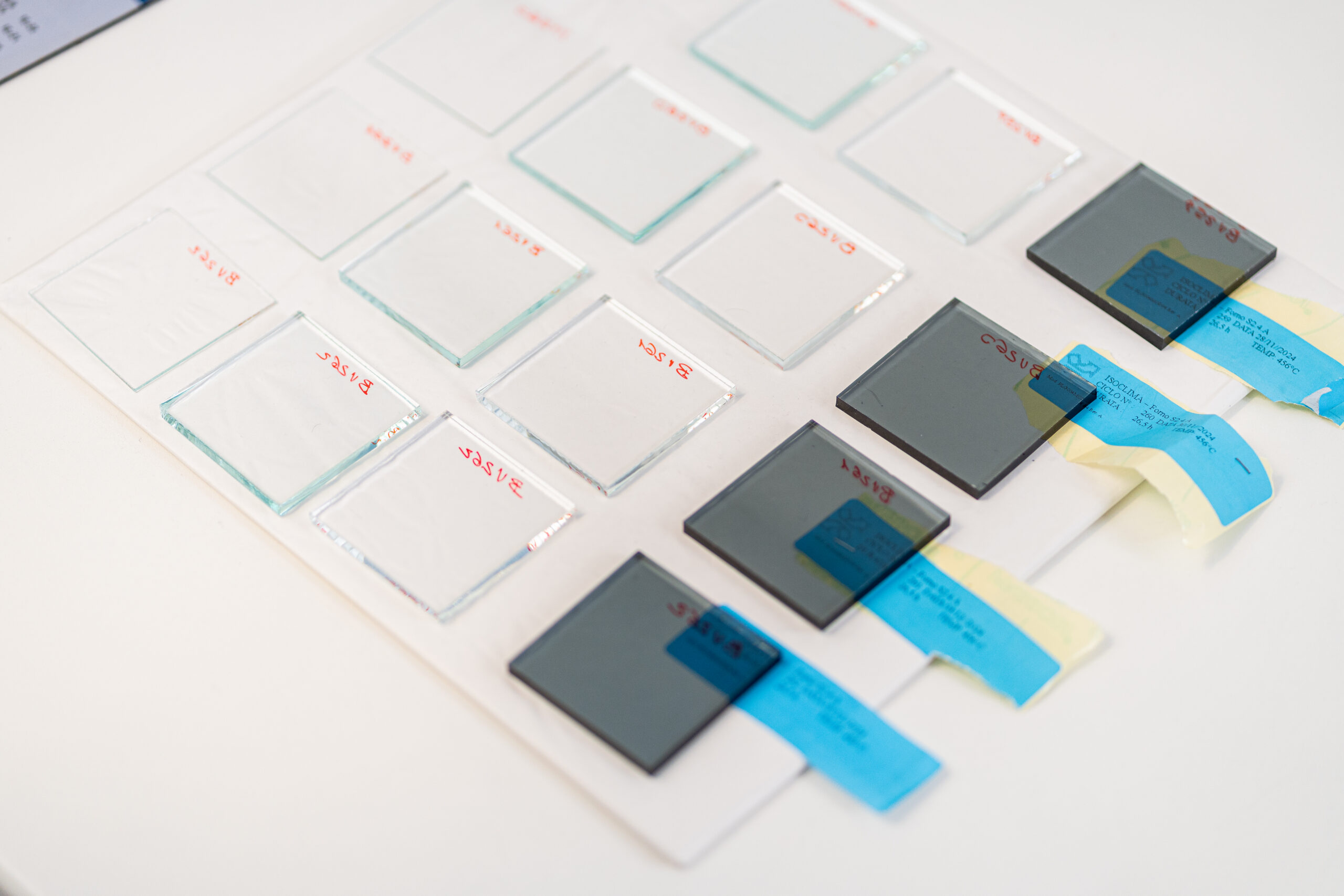
OmniLite® is one of our products, made by layering two or more sheets of glass, with specific plastic materials inserted depending on the required resistance level.
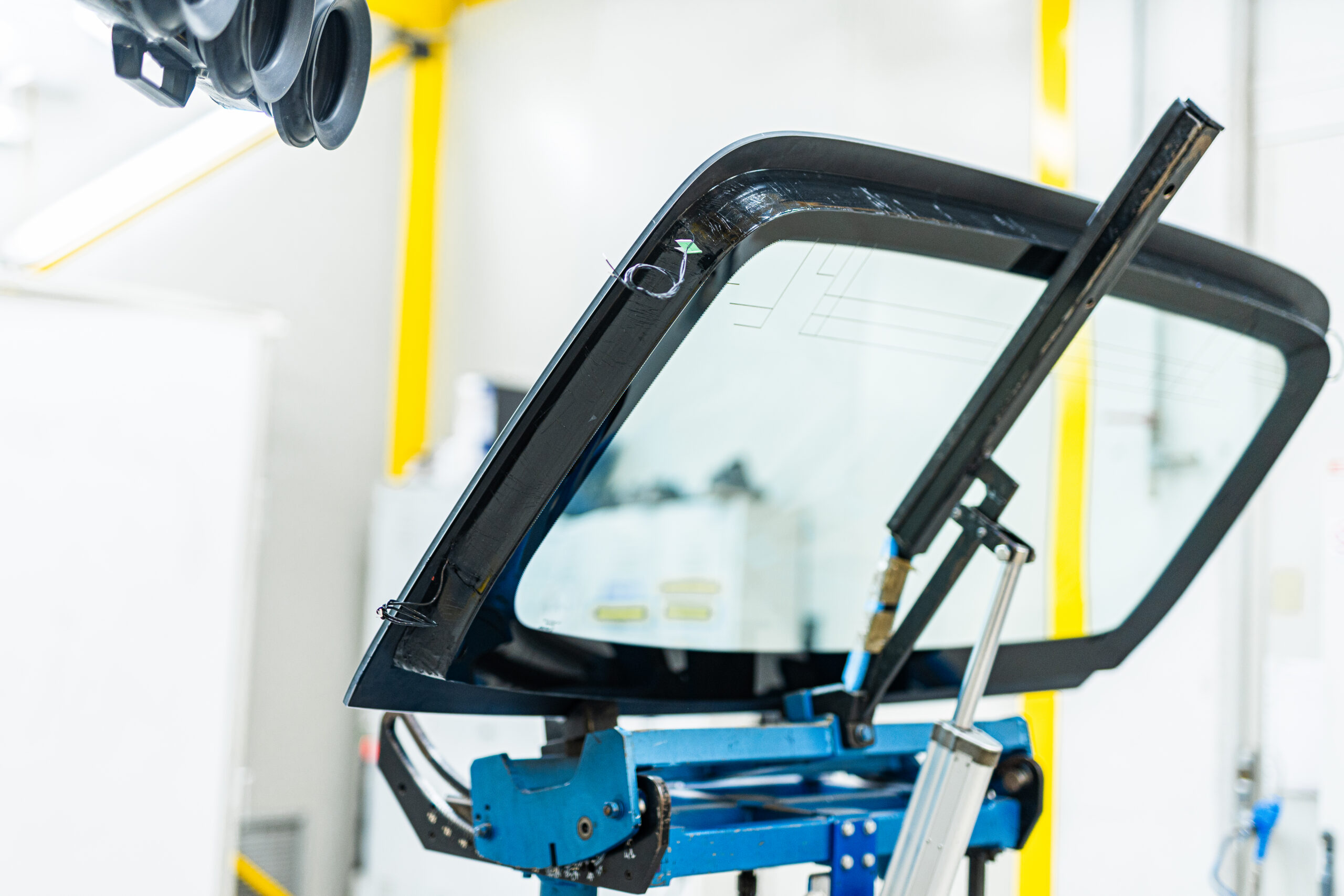
How do we ensure that a glass is truly resistant? For the highest levels, the standard requires the “Axe Test,” which ensures that glass (roof and windshield) installed on earthmoving or forestry vehicles can withstand impacts from stones, bulky debris, and large branches. The glass used in this case is certified according to the EN356 standard and is designed to withstand a minimum number of strikes from a blunt object (blade) weighing around 2 kg, made of forged steel capable of exerting extremely high localized impact forces.
Installation of Shatterproof Glass: How OmniGard® Works
The installation of shatterproof glass does not follow uniform procedures.
It all depends on the required level of shatterproof protection. OmniGard®, for example, is the easiest shatterproof glass to install on the market, characterized by a minimal increase in thickness and complete compatibility with the vehicle’s original structure.
The installation of OmniGard® products does not require complex interventions or dedicated structures, as the installation of the reinforced transparencies is quite similar to that of the vehicle’s standard glass. This, in turn, minimizes the necessary interventions on the car, ensuring the normal operation of the sealing systems and window lift mechanisms originally present in the vehicle.
Lastly, what unites our shatterproof transparencies is their road use homologation according to the ECE-R43 standard. This guarantees both the installer and the end customer that the product is tested and validated according to the strictest European standards and is qualitatively equivalent to the original product in the vehicle.