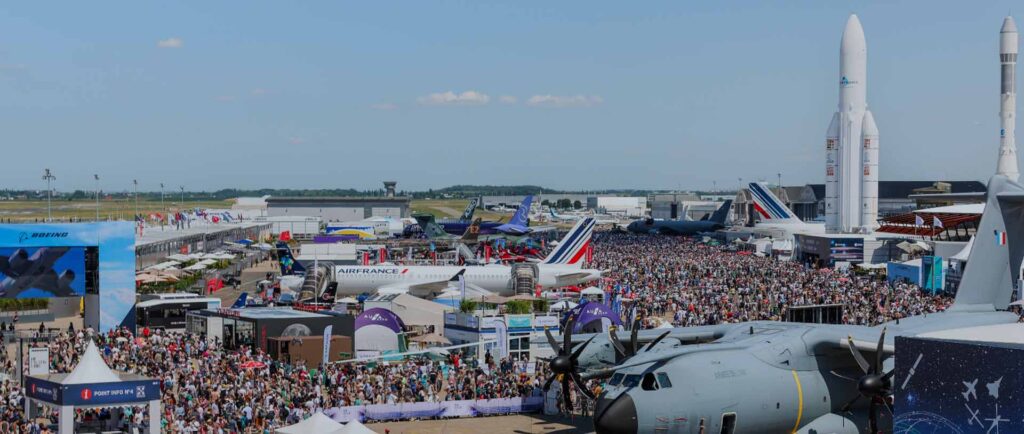
Isoclima will participate in the 54th edition of the International Aerospace and Space Exhibition – Paris Air Show! This is the world’s leading aerospace trade show dedicated to the aviation and space industry, taking place from June 19 to 25, 2023, at the Le Bourget exhibition center in Paris. During the event, industry professionals will have the opportunity to exchange knowledge and showcase the latest innovations.

We will be delighted to welcome you at our Stand E14 Hall 2B, where we will present some of our transparent products designed to meet the needs of the aerospace sector.

We look forward to seeing you there!

“Isoclima’s 2022 results exceeded expectations, despite rising raw material costs and supply chain challenges. This positive performance is due to the creativity and flexibility that have characterized the Group’s strategy and operations,” says Daniele Santi, Isoclima’s Commercial Director, emphasizing the company’s position as a global leader in high-quality glass and transparent surfaces. These technologically advanced products are the result of an engineering process developed in collaboration with customers. “Growth has been particularly strong in the automotive and marine sectors, followed by the rail industry,” Santi explains. “But our focus is increasingly on the future, where innovation is the key word.”

Today, Isoclima Group operates 7 production plants, holds 120 patents, employs 1,000 people, serves over 500 clients, and produces more than 500,000 square meters of glass. The company specializes in transparent protection solutions made of glass, polycarbonate, or acrylic, for applications ranging from armored vehicles to helicopters, luxury cars to yachts, rail transport to aerospace, and security architecture.

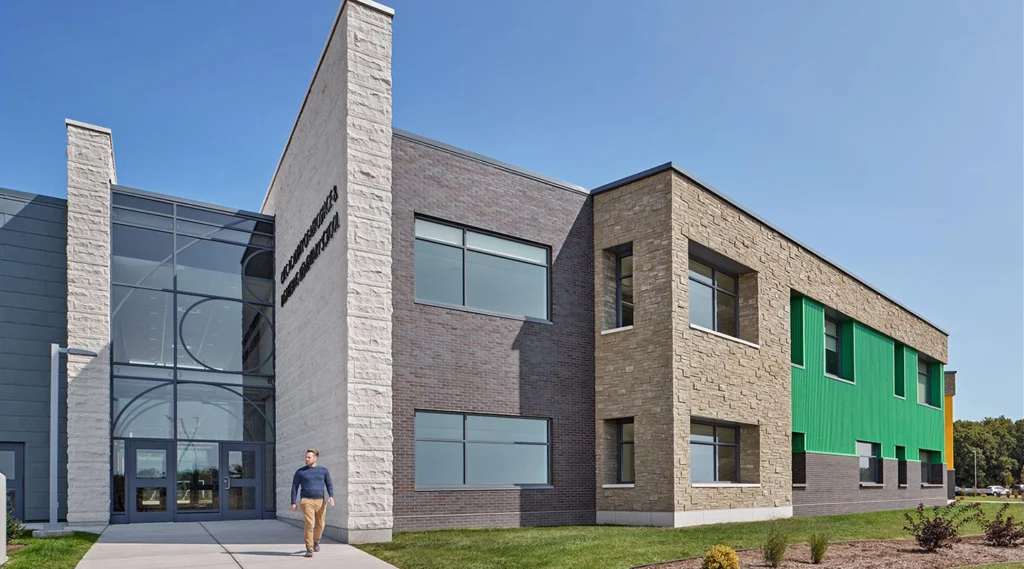
“Isoclima is capable of offering architectural products originally developed for security applications, such as anti-burglary and bullet-resistant glass,” says Santi. “This is a major concern in the United States, where, as of January 1, 2023, bulletproof glass has become mandatory in newly constructed school buildings. In response to mass shootings, American schools are increasingly adopting security measures.”

But how is glass made resistant to impacts and mechanical stress? “There are two processes that achieve this: chemical tempering and thermal tempering,” Santi explains. “Chemical tempering works differently from thermal tempering, even though the end goal is similar. However, chemical tempering offers significantly better optical performance. At Isoclima, we have chosen to invest in chemical tempering because it aligns more closely with our core business. In this area, we installed a plant in 2022 at our Este facility, capable of processing 10-meter glass sheets.”

But that’s not all. “Sustainability is also a key part of our strategic development plan. We are currently working on several projects and initiatives aimed at designing sustainable products,” Santi emphasizes. For Isoclima, carbon footprint reduction and the goal of achieving “Net Zero” are not abstract concepts but the foundation of a concrete strategy.

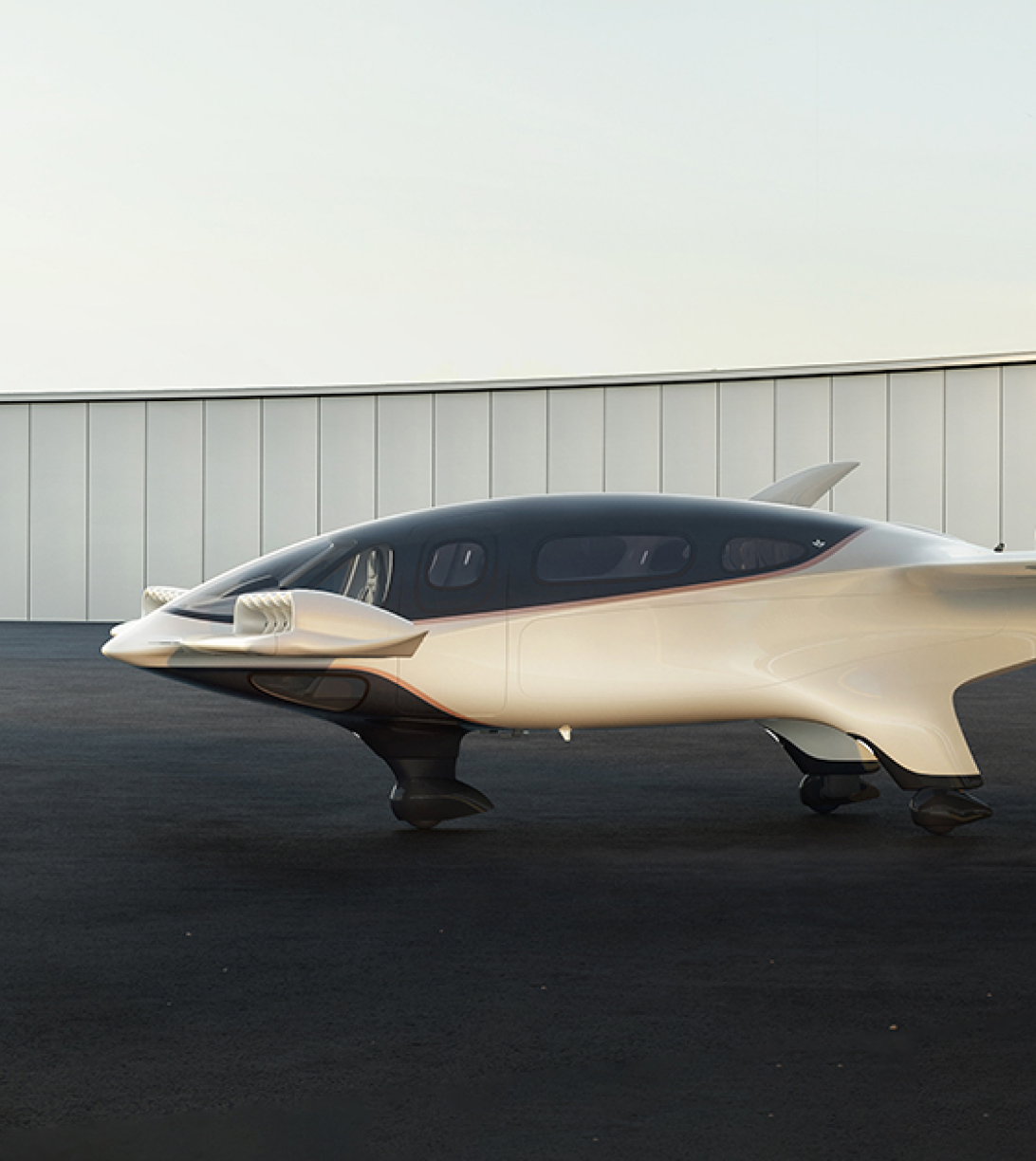
“We aim to expand our offering to include polycarbonate transparent solutions, which are increasingly in demand, and electronic glass with integrated sensors. The future is shaped by the concepts of geometry, weight, and comfort. This marks the beginning of a technological challenge that promises to revolutionize mobility. The first step is Autonomous Driving, followed by the research and development of commercial transport ‘drones’ capable of vertical take-off and landing, eliminating the need for a runway—essentially, flying taxis. These aircraft, known as eVTOLs (Electric Vertical Take-off and Landing), are powered by electricity,” Santi concludes.

Isoclima will take part in Space Meetings Veneto—an international event that will bring together leading global players in the space economy and emerging technology sectors in Venice from May 15 to 17, 2023. The event will focus on the latest developments in satellite applications, innovative technologies, supply chains, and investments.

The event is organized in collaboration with the Veneto Region and the Regional Innovative Network AIR – Aerospace Innovation and Research. These entities have mapped and connected regional excellence to create a true ‘ecosystem’ that fosters collaboration among public institutions, universities, research centers, and companies. Thanks to this initiative, Veneto has become one of the leading aerospace regions in Italy.

Glass surfaces are now designed to fulfill multiple tasks, beyond simply protecting from the elements.

This is why we talk about panels made with infrared radiation protection systems that ensure significant light and thermal comfort.

Specifically, we are talking about coated glass that limits solar radiation inside a cabin by calibrating the amount of infrared rays entering the environment.

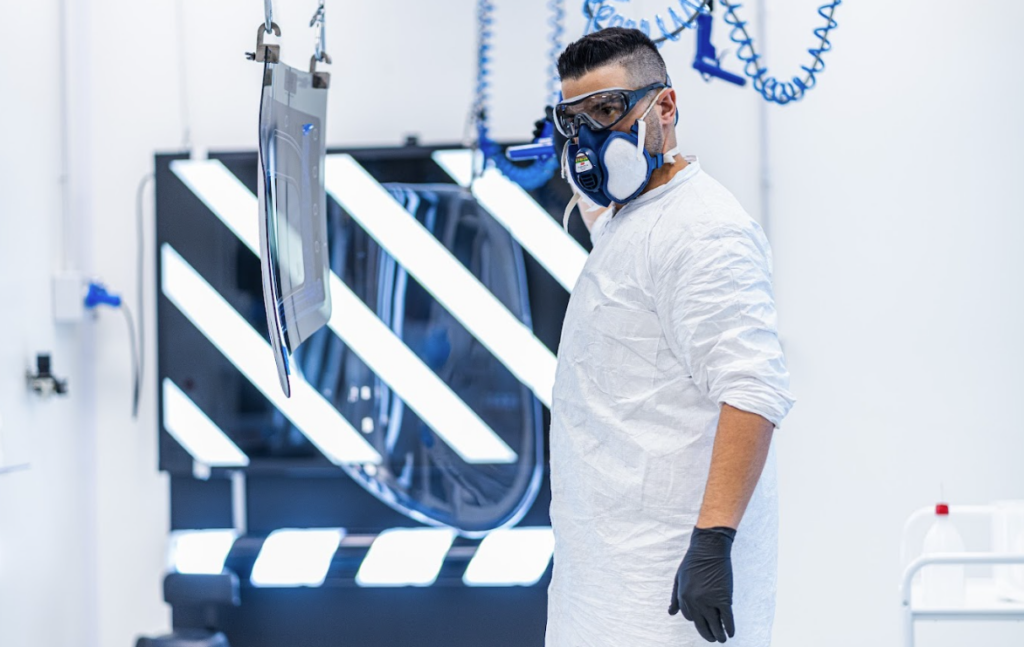
This is a highly effective technology that allows for concrete control over the amount of infrared radiation that penetrates through the glass. Let’s explore the key steps of this production process.

Coating: The Main Design Element of the Transparency

Among the most notable innovations regarding glass, and closely aligned with technological progress, infrared radiation protection systems are undoubtedly the most interesting.

This is because having a transparent material that remains clear while filtering out solar radiation seems almost paradoxical, yet it is possible.

How? Thanks to the coating, a metallic layer that is applied in a dedicated plant where metal parts are released onto the glass. However, not just any metal. The precious metal used, depending on its physical-chemical properties, gives the glass different physical characteristics.

Why Coating is the Right Choice for Glass that Protects Against Infrared Rays

The most interesting aspect of coating is its functions.

Glass designed as a protection system against infrared radiation has two specific purposes:

  • The first is to significantly reduce the electromagnetic emission of infrared rays, allowing for better control of the temperature inside the cabin and offering greater comfort.
  • The second concerns the metal deposition. This can be used as resistance with specific electrical collectors, taking advantage of the coating’s ability to act as an anti-fog or defroster for the glass.

In short, a truly creative and innovative use, enhanced by the fact that for the automotive sector, we do not produce standard films and interlayers but design customized coatings to offer maximum performance.

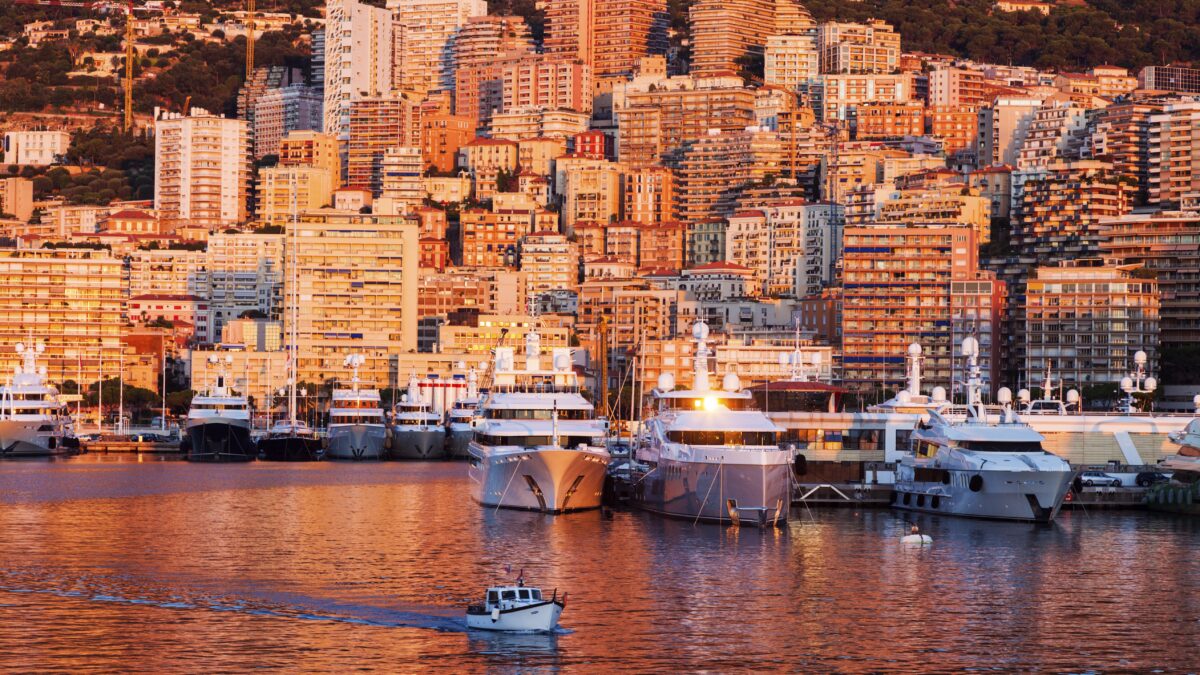
The partnership between Isoclima and Sanlorenzo, a leader in the luxury yacht sector, has deep roots dating back to 2003. From the very beginning, we have been dedicated to developing advanced and innovative glass solutions for yachts to meet the needs of the market and yacht owners. The first project involved curved and flat glass for the Sanlorenzo SL88, featuring high structural strength and optical performance. This was just the beginning of a long and fruitful collaboration that has led to the creation of numerous yachts equipped with innovative, high-quality glass, ensuring safety, comfort, and exceptional performance for their owners.

Outstanding Results Through Co-Design and Technological Innovation

In the development of yacht glass, co-design is at the heart of our collaboration, allowing us to create futuristic products. The integration between our technical teams enables us to address and resolve any issues effectively. Thanks to the research and tests carried out by our R&D department, we achieve important goals in terms of performance and quality. Flexibility is a key feature of our partnership, allowing us to successfully tackle any challenge during the project execution. From curved to flat glass, from side windows to panoramic canopies, each component is meticulously designed and manufactured to ensure uncompromising excellence. A prime example is our Vision Plus®, developed together with the Sanlorenzo team: a glass that “blends” with the color of the yacht, further enhancing the beauty of an exceptional nautical vessel.

Turnkey Service and Mutual Trust

Our commitment goes beyond the design and production of yacht glass: we offer a complete service, from conception to installation. This approach allows us to provide our clients, the yacht owners, with total security and a 360° service. With the supply of glass for about 200 vessels, the trust of our clients forms the foundation of our relationship with Sanlorenzo and represents our greatest success. Every glass we provide is the result of a craftsmanship and technological process that guarantees resistance, durability, and excellent performance even in the most extreme conditions. Our glass not only adds aesthetic value to yachts but also provides reliable protection against the elements and contributes to creating an unforgettable sailing experience for owners and their guests.

The partnership between Isoclima and Sanlorenzo is an example of excellence in the luxury yacht industry. Thanks to our long experience in the sector and our continuous pursuit of innovation, we are able to offer yacht glass that exceeds every expectation in terms of quality, performance, and design. Our dedication to the customer and our attention to detail allow us to maintain the trust of our clients and continue to be a benchmark in the industry. We are proud to contribute to the success and satisfaction of yacht owners around the world and look forward to continuing this extraordinary collaboration with Sanlorenzo for many years to come.

The need to protect one’s home, starting from the entrance, is quite common. For this reason, many people often consider equipping their home with armored doors with shatterproof glass as the most appropriate solution.

Is it really the best choice? Let’s start with an important premise: an armored door with glass can also satisfy the desire to keep the interior environment bright.

In this case, we can affirm that security, thermal insulation, and protection against weather elements are well present in a door with shatterproof glass.

A noteworthy aspect is the elegance of these doors, which stand out from the classic doors made from a single material.

A “detail” that certainly adds charm and can give a unique welcome to a home that wants to stand out.

Various Types of Shatterproof Glass

Where should one begin when choosing armored doors with shatterproof glass? A good first step might be to get to know the main types of shatterproof glass, usually divided into four categories:

  • Bulletproof glass
  • Crime-resistant glass
  • Vandal-resistant glass
  • Glass with safety features

Naturally, the preference for one type of glass over another depends on the specific needs and performance required.

An important factor to consider is the breakage resistance offered by the glass, with its thickness designed based on the client’s requirements.

Polycarbonate Film: A Guarantee of Safety for People

Do you know what distinguishes excellent shatterproof glass from low-quality glass? Its reaction to breakage. The concept we are about to explain is valid for both armored doors with shatterproof glass and transparent elements used in buildings like banks or luxury shops.

When one of Isoclima’s glass panels breaks, the shards produced by the breakage are “contained” by the polycarbonate film or structural interlayers, preventing serious accidents for the people involved.

The structure, therefore, remains cohesive and, even though shattered, stays stable, avoiding dangerous consequences.

Our flagship product when it comes to shatterproof glass is OmniLite®, a transparent material made using a multi-layer technology that incorporates a central polycarbonate sheet.

We laminate the panels according to the required level of protection, ensuring that each of our products represents the highest level of security.

If we asked you to think of a glass structure, what is the first one that comes to mind? A very interesting example of structural glass is the Louvre Pyramid in Paris, an exceptional metal and glass structure that has become famous worldwide. The history of glass teaches us that its primary function is to let light into buildings, with glass traditionally playing a secondary role in the structure itself.

However, the evolution of architecture and design has led to a different use of glass, which has become an integral part – if not the protagonist – of structures characterized by a great visual impact.

Steel and Glass, a “Mechanical” Symbiosis

Using structural glass as the main material for some buildings is the response to a growing need to “lighten” the architectural envelope, making it more charismatic and increasing its transparency.

Glass, in collaboration with steel, takes on more structural functions. This mechanical symbiosis has allowed for the creation of suspended facades and incredible support columns, such as roofs, walkways, and stairs.

The most interesting property of glass, and the most well-known, is its transparency.

For this reason, it is widely used in construction with very specific architectural characteristics.

Transparency is not the only element that qualifies glass. It also has a high degree of hardness, a feature enhanced through processes such as tempering (thermal or chemical), which gives it greater resistance.

An Excellent Example of Structural Glass by Isoclima

We’ve already mentioned stairs as one of the structures where glass takes center stage.

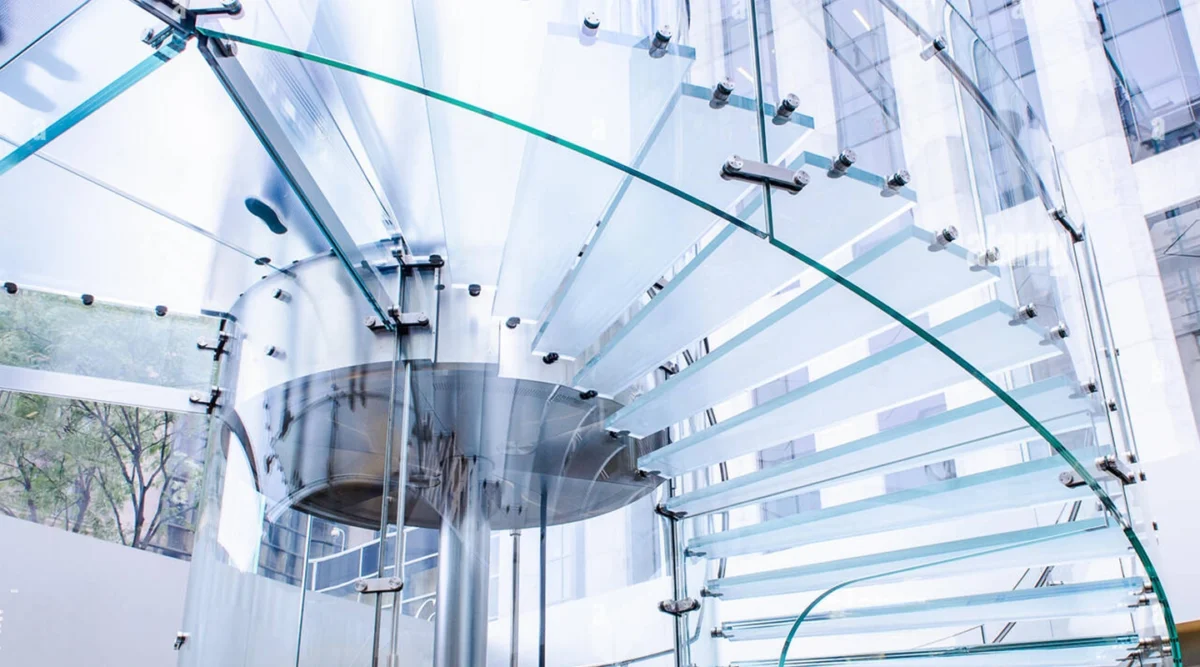
A notable example is a particular staircase we designed for a major global leader in technological instruments such as computers, smartphones, and tablets. In this case, our contribution was the metal structure that surrounds a huge glass “tube” placed inside a room.

The interlayer, along with the glass, becomes an important and wonderful example of how metal can accompany transparency to create architecture that stimulates the imagination and enchants the visitor.

Also known as “transparent armor,” bulletproof or ballistic glass is a transparent material specially designed to resist the penetration of blunt objects and projectiles.

The creation of this type of ballistic glass typically follows a specific formula: two or more types of glass are combined depending on the required level of protection.

Those who know us understand that few companies in the world are able to offer high-end, sophisticated, and highly resistant glass.

Although, by its nature, a glass will never be entirely impenetrable, thanks to our technologies and continuous research, we are able to offer a product that exceeds the normal market standards.

From Automakers to Installers: Who Are Our Most Loyal Clients

Who installs ballistic glass? And more importantly, who requires it? Our collaboration with some of the most prestigious international automakers is one of our greatest achievements: Audi, Mercedes, and BMW are just a few of the high-profile brands that offer armored vehicles assembled directly in our facilities.

For some time now, we have also been working closely with body shops specializing in armored vehicle fittings and vehicle armoring (including aftermarket for standard vehicles). Even when choosing our “external” partners, we are very demanding.

The armorers must be certified for such operations according to OEM directives and must leave the basic characteristics of the vehicle unchanged.

The Protection Levels We Refer To

The VPAM, EN1063, and STANAG 4569 Ballistic Standards represent our reference standards for the production of ballistic glass intended for the automotive sector, both for civilian and military market products.

For the civilian market, the applicable standards are VPAM, for which we provide products with ballistic protection levels up to level PM10 (7.62x54R, with incendiary AP ammunition), and EN1063, more commonly used in the Italian market, for which we guarantee protection levels for all available classes, from the most common .44 Rem.Mag. and 7.62x39mm ammunition to the heaviest BR7 (7.62x51mm NATO).

For the military sector, the relevant standard is STANAG 4569, for which our products are designed to resist threats from both hard metal projectiles, such as tungsten carbide (WC), and fragments simulating grenade splinters (FSP).

Our clients not only require ballistic transparencies but also products capable of withstanding certain temperatures. Especially for the STANAG 4569 ballistic standard, the military vehicle must ensure protection for occupants at extreme temperatures, ranging from as low as -32°C to as high as +50°C.

A real challenge that requires innovation, technology, and experience.
Design and interior architecture are disciplines created to amaze the eyes of those who enter a space.

Shapes, geometries, heights, and structures intertwine with each other, imposing an originality that is often hard to forget. In this field, every element, even the most unexpected, becomes perfect for giving the location that charismatic and captivating touch that makes it unique.

After all, we know well that originality and style must be the key ingredients in every environment and every project.

Residences, lofts, government or corporate buildings, and yachts offer the perfect opportunity to play with imagination and create something truly unique.

One of the structures that creates amazing visual effects is the staircase, especially those without a metal structure. Let’s look at a practical example.

Between Curves and Technology

We are very familiar with the effect that staircases without a metal structure can create because we worked on a prestigious project where the staircase designed gave the environment an extraordinary touch.

For this global leader in technologies such as computers, smartphones, and tablets, we contributed by designing the metal structure that wraps sinuously around a huge “tube” of glass.

Designing an interlayer with such soft lines, forming almost an “S” shape between glass and steel, is not at all simple. We used all of our knowledge to create a lightweight structure that perfectly supports the glass steps without weighing down the room, but rather giving it that charm typical of spaces designed by visionary architects.

How to Capture the Gaze

The beauty of this project lies not only in the fact that we created a staircase without a complete and invasive metal structure but also in the contribution we made to shaping something very, very innovative.

The spiral structure captures the gaze with a faceted cut, very geometric but softened by the interlayer, offering more gentleness to the severity typical of glass.

To create an even more striking effect, such a structure can be combined with a décor style that plays with abstract art and imaginative colors.

The result will undoubtedly be impeccable.

Just like in this company.

Have you ever had to clear the fog from your car’s windows with your hand because of poor visibility caused by condensation that forms on the windshield in certain environmental conditions? Or have you ever seen a touring car racing driver do it with a windshield brush while speeding at high velocity on a race track?

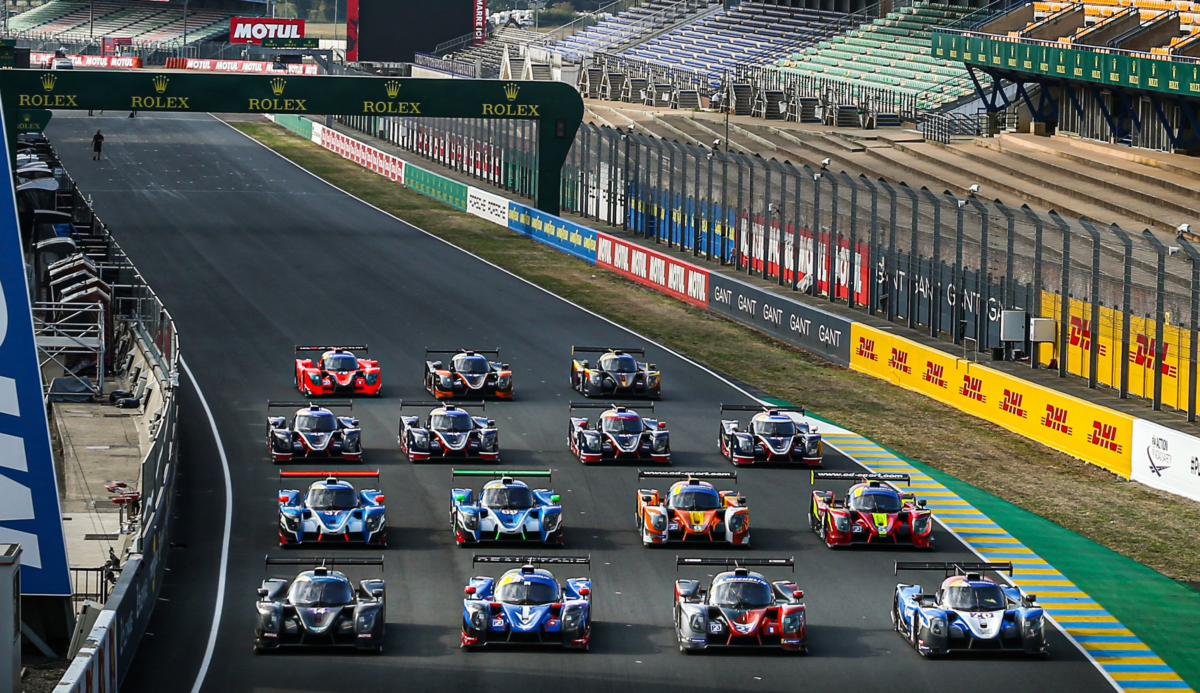
This happens in both cases when anti-fog systems are not used to prevent this issue. It occurred to a driver during a Supercars Championship race: a camera inside the cockpit captured the driver cleaning the windshield with a brush to remove condensation and continue his race on one of the most famous circuits of the Australian championship.

What can be done in these cases? Choose an Isoclima product, just like the company Gen3 did when they proposed our glass to racing car manufacturers.

Isoclima x Gen3

For the company Gen3, we produced a heated polycarbonate windshield, which is our answer for those looking for anti-fog systems for racing cars. In these vehicles, air conditioning systems that typically eliminate condensation from the windshield under normal conditions are removed to minimize the vehicle’s weight.

This heated windshield has a huge advantage in critical weather conditions: it doesn’t fog up. This is the windshield that the Supercars Championship driver would have surely wanted when he was cleaning his windshield with a brush while driving at over 200 km/h. If his team had requested our windshields before the race, the visibility would have remained intact even in the most challenging conditions, allowing the driver to focus solely on driving.

The Gen3 company expressed great satisfaction with our prototypes, which passed anti-fog tests even in extreme rain and humid environments.

Transparency and Durability: Must-Haves for the Automotive Sector

When it comes to automobiles, whether for racing or daily use, the glass must have a common characteristic in all cases: it needs to be transparent and also durable. This holds true even when designing anti-fog systems for cars, where visibility should never be sacrificed for the strength of the glass. The polycarbonate windshields we’ve designed are 250 times more resistant to impact than a regular glass windshield.

Gen3 presented our glass to the Supercars Championship, and it was a success among the drivers: our windshields showed no fogging or mist, offering crystal-clear visibility.

A winning product, without a doubt.